A Seasonal Awadhi Meal Plan: Balancing Rich Gravies with Light Lentil and Gourd Preparations
By SwaadSathi · · Updated 08 Oct 2026
Discover how traditional Lucknow dastarkhwans balance luxurious meat and paneer gravies with cooling gourds and tempering lentils across the changing seasons.
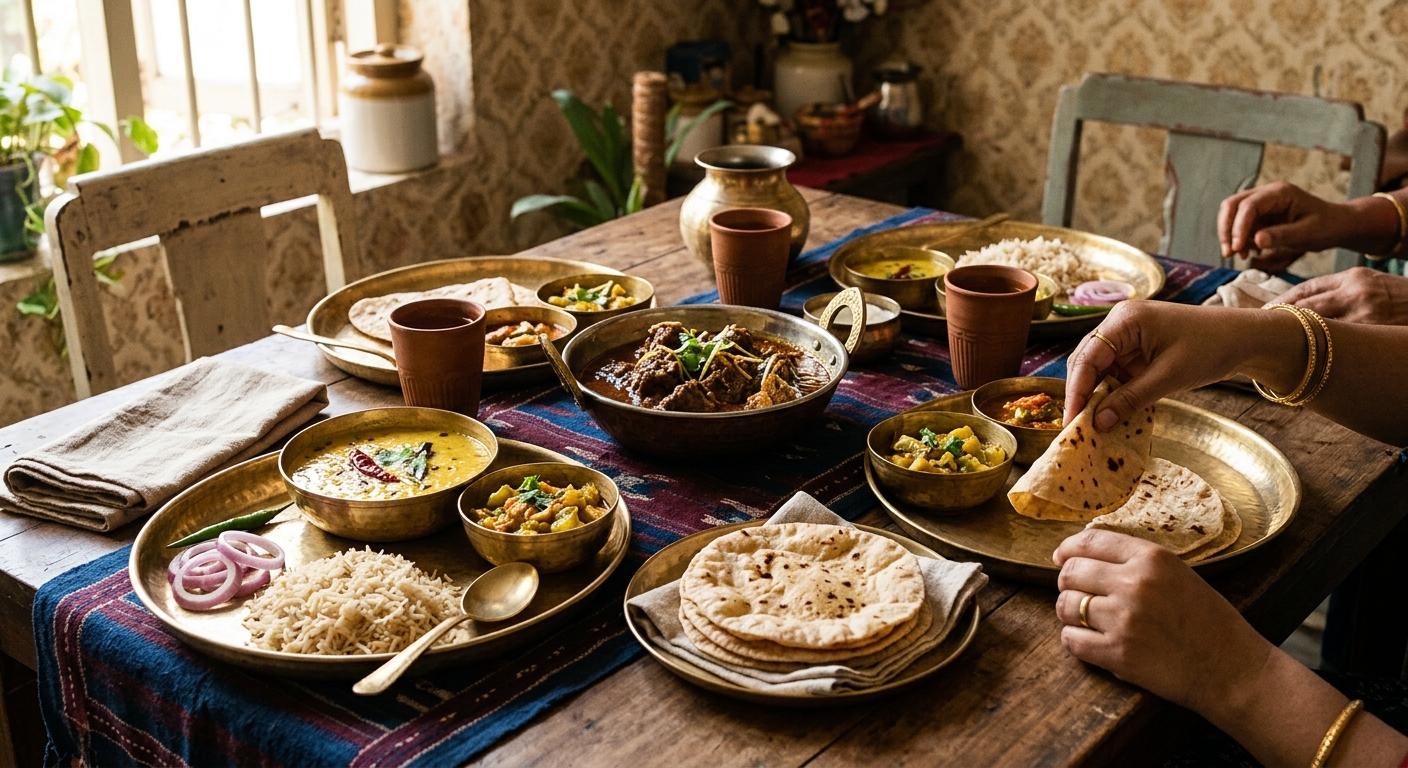
The Philosophy of Balance in Lucknow’s Dastarkhwan
Awadhi cuisine is globally renowned for its slow-cooked qormas, fragrant biryanis, and rich, ghee-laden gravies. However, everyday eating in Lucknow is rooted in a refined understanding of balance. Traditional cooks never design a meal around richness alone; instead, they offset heavy, spice-laden preparations with digestive, cooling, and subtly seasoned accompaniments. This duality reflects an acute awareness of seasonal well-being, dietary harmony, and culinary sophistication.
In the culinary heritage of the Awadh region, every meal reflects a dialogue between richness and restraint. When a dish features bone marrow, reduced cream, or deeply caramelized onions, the supporting elements on the plate are deliberately kept simple. By weaving light lentils, fresh seasonal gourds, and aromatic steam into the menu, a traditional Awadhi meal satisfies the palate without overwhelming the digestive system.
Understanding Seasonality and Ingredient Temperament
Seasonal dining in northern India relies on the concept of ingredient temperament—choosing foods that either cool the body during the oppressive dry heat of summer or provide warmth during crisp winter evenings. During warm months in Lucknow, gourds such as bottle gourd (lauki), ridge gourd (turai), and pointed gourd (parwal) become kitchen essentials. These vegetables are high in water content, naturally sweet, and exceptionally receptive to gentle spices.
Rather than using heavy garam masalas or nut pastes on these vegetables, home cooks in Lucknow prepare them with minimal intervention. A simple tempering of cumin seeds, cracked black pepper, and a light measure of ghee allows the inherent sweetness of the gourd to shine. When paired alongside a deeply spiced mutton salan or a rich shahi paneer, these light vegetable preparations provide essential palate relief.
Integrating Gourds into Rich Regional Curries
One classic demonstration of this balance is the beloved regional preparation known as lauki gosht. Instead of cooking meat exclusively in a dense onion-yogurt reduction, tender pieces of mutton are simmered alongside large chunks of peeled bottle gourd. As the curry cooks on low heat, the gourd absorbs the savory juices of the meat while simultaneously lightening the body of the gravy. The resulting sauce is fluid, delicately spiced, and noticeably less cloying than a standard qorma.
For purely vegetarian meals, gourds can be paired with split legumes. Chana dal cooked with lauki creates a hearty yet clean dish. The nutty chew of the Bengal gram anchors the preparation, while the soft bottle gourd breaks down slightly to yield a naturally creamy consistency without the need for dairy creams or cashew pastes.
The Subtlety of Awadhi Lentil Preparations
Lentils are indispensable to the Awadhi lunch, serving as a soothing baseline against more complex curries. Unlike the thick, butter-heavy lentil dishes common to roadside dhabas, classic Lucknowi dals emphasize lightness, clarity, and precision seasoning.
A premier example is Dal Sultani, an arhar (pigeon pea) preparation associated with royal kitchens. The cooked lentils are whisked with a splash of milk or yogurt for mild richness, then lightly perfumed with saffron and smoked gently using the dhungar method (hot charcoal with a drop of ghee and cloves). Despite its regal lineage, the dish remains light on the stomach.
Similarly, Dhuli Urad Dal (split, husked black gram) is frequently prepared dry or semi-dry, cooked until each grain is tender but distinct. Finished simply with slivers of fresh ginger, thinly sliced green chilies, and a crisp onion baghar (tempering), it introduces texture without competing with the main gravy on the table.
A Curated Seasonal Meal Blueprint
To recreate this balanced Awadhi dining experience at home, consider structuring your afternoon meal around harmonious contrasts rather than uniform intensity:
- The Main Gravy: A slow-cooked Awadhi Mutton Qorma or Paneer Pasanda, rich with fried onion paste, yogurt, and aromatic whole spices like green cardamom and mace.
- The Vegetable Counterpart: Turai ki Sabzi cooked gently with whole cumin seeds, a touch of turmeric, and green chilies, allowing its natural sweetness to counterbalance the savory qorma.
- The Lentil Course: A fluid Arhar Dal tempered simply with hing (asafoetida), zeera (cumin), and dry red chili, providing clean warmth and digestive support.
- Breads and Grains: Steamed aged basmati rice alongside thin, soft phulkas or khamiri roti, avoiding excessively heavy fried breads.
- Accompaniments: Fresh cucumber and mint raita or thinly sliced onions soaked in vinegar or lemon juice to cleanse the palate between courses.
Techniques for Everyday Cooking
Achieving this harmony requires mindful cooking techniques. When preparing your vegetable and dal courses, resist the temptation to replicate the spice blends used in the primary gravy. Avoid pre-packaged garam masala blends across all dishes, as this leads to flavor fatigue.
Rely instead on single-spice accents: a pinch of crushed black peppercorns for gourds, a singular clove or green cardamom pod for lentils, and fresh herbs added right before serving. By keeping supporting dishes honest and uncluttered, the artistry of your rich gravies stands out with greater clarity, creating an authentic, sustainable Awadhi dining tradition at home.