Awadhi Dum Pukht: A Beginner's Guide to Slow-Cooking Aromatic Biryanis
By SwaadSathi · · Updated 08 Oct 2026
Discover the art of Awadhi Dum Pukht cooking from Lucknow. This practical guide breaks down the science of sealing pots, gentle heat, and layering fragrant mutton and vegetable biryanis.
The Philosophy Behind Awadhi Dum Pukht
Originating in the royal kitchens of Lucknow, Dum Pukht is one of the most revered culinary techniques of Indian gastronomy. The Persian terms 'dum' (meaning to breathe or hold breath) and 'pukht' (meaning cooked) describe a process where food is gently braised in its own juices and steam within a hermetically sealed container. Developed during the reign of Nawab Asaf-ud-Daula in the eighteenth century, this method allowed food to cook slowly over low embers, ensuring that delicate aromatics and moisture remained trapped inside the vessel. Unlike rapid boiling or aggressive pan-frying, Dum Pukht softens tough cuts of meat and infuses grains of rice with floral perfumes, resulting in dishes that rely on aromatic complexity rather than fiery heat.
The Core Anatomy of Dum Cooking
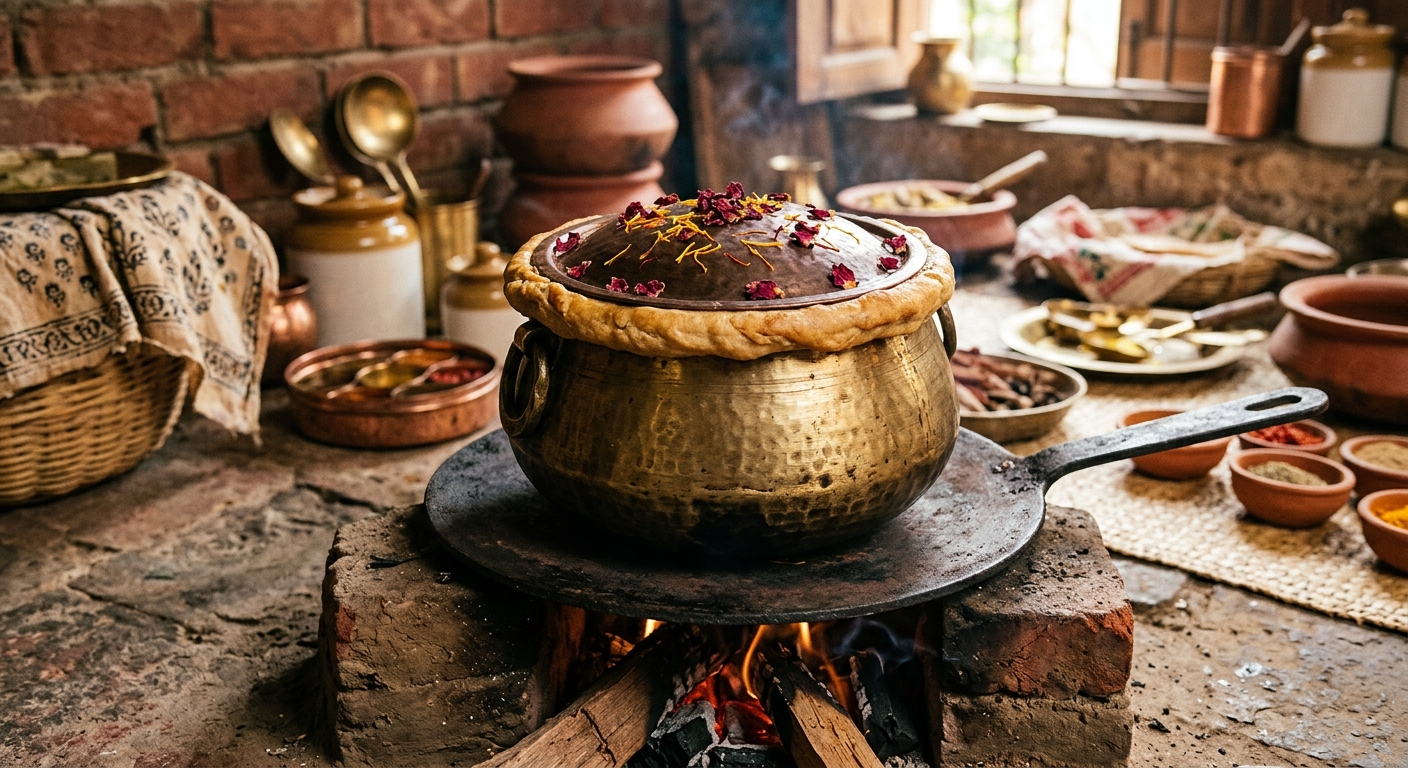
To successfully execute Dum Pukht at home, one must understand its three mechanical pillars: the vessel, the seal, and the heat source. Traditionally, cooks in Lucknow use round-bellied copper or brass pots called degchis, which have a narrow neck designed to condense rising steam and send it back down into the cooking liquid. In a modern kitchen, any heavy-bottomed Dutch oven, cast iron casserole, or thick stainless-steel pot works exceptionally well. The seal, historically known as the 'parda', is formed using a rolled rope of pliable whole wheat dough (atta and water) placed along the rim of the pot before pressing down a tight-fitting lid. When the heat expands the moisture inside, the dough hardens and creates a tight pressure seal. Finally, the heat must be gentle and indirect. Home cooks achieve this by placing the pot on top of a thick flat griddle (tawa) over low flame, distributing heat evenly across the base and preventing scorching.
Preparing the Awadhi Spice Profile
Awadhi cuisine is distinguished by restraint and perfumery. Where Hyderabadi biryani often features bold punches of green chilies, sour curd, and roasted coriander, an Awadhi biryani relies on layered floral and warm notes. Key spices include mace (javitri), green cardamom, nutmeg, cloves, and star anise, ground into a fine powder commonly known as the Awadhi garam masala or potli masala. Saffron strands soaked in warm milk provide rich golden color and an earthy fragrance, complemented by subtle dashes of screwpine water (kewra) and rose water. Clarified butter (ghee) is the primary cooking fat, chosen for its high smoke point and ability to capture fat-soluble volatile flavor compounds during long cooking periods.
Mastering the Awadhi Mutton Biryani
For an authentic mutton biryani, meat selection is critical. Cuts like bone-in goat shank, shoulder, or ribs contain ample connective tissue and collagen, which melt into gelatin over long, low-temperature cooking, enriching the braising sauce known as yakhni. The meat is first marinated with yogurt, ginger-garlic paste, and finely ground spices. It is gently browned in ghee alongside thinly sliced golden fried onions (birista) and then simmered until roughly two-thirds tender. Concurrently, long-grain aged basmati rice is parboiled in plenty of heavily salted water infused with whole spices. The salt level of the boiling water must match sea water, as this is the only stage where the rice grains absorb seasoning. The rice is drained when it reaches about seventy percent doneness—firm to the bite with a solid white core remaining inside the grain.
Layering begins with the rich meat and its reduced gravy at the bottom of the pot, followed by the parboiled rice spread evenly across the top. Drizzles of saffron-infused milk, kewra water, and warmed ghee are scattered over the rice surface. The pot is sealed with dough and placed over the tawa on low heat for forty to fifty minutes. Inside the chamber, the steam from the meat gravy rises through the grain bed, cooking the rice to completion while flavoring every grain from the bottom up.
Adapting Dum Pukht for Vegetables
Applying the Dum Pukht method to vegetables requires adjusting cooking times and moisture levels, as vegetables release water rapidly and can turn mushy if exposed to excessive braising. Root vegetables like carrots, hearty florets of cauliflower, firm green beans, and fresh paneer or raw jackfruit (kathal) work best. Raw jackfruit, in particular, is celebrated in Lucknow as a meat substitute due to its fibrous texture, which absorbs aromatic gravies exceptionally well. Vegetables are lightly seared in ghee and coated in a spiced yogurt base to form a concentrated sauce. Because vegetables cook faster than mutton, the rice layered on top should be cooked slightly further—around seventy-five to eighty percent—and the sealing duration should be reduced to twenty-five to thirty minutes. This ensures the vegetables remain tender and intact while the rice becomes light and separate.
Serving and Resting the Dish
The final stage of Dum Pukht requires patience. Once the pot is removed from the heat, it should rest undisturbed for ten to fifteen minutes. This resting phase allows the internal steam pressure to equalize and the hot juices to redistribute into the rice grains, preventing them from snapping when handled. To open, gently slice through the dried dough rim with a small knife and lift the lid to release the aromatic steam. Use a flat, wide saucer or a broad slotted spatula to serve, lifting from the bottom to bring meat or vegetables up along with the rice. Avoid vigorous stirring, which breaks the delicate rice grains and turns the dish into a uniform mash. Serve alongside sliced onions, fresh mint, and a light burani raita—whisked yogurt flavored with raw garlic and roasted cumin.