Dastarkhwan Etiquette: Historical Hosting Rituals and Meal Courses in Awadhi Culture
By SwaadSathi · · Updated 08 Oct 2026
A deep dive into the refined hospitality, communal dining adab, and multi-course serving traditions that define the historic Awadhi dastarkhwan in Lucknow.
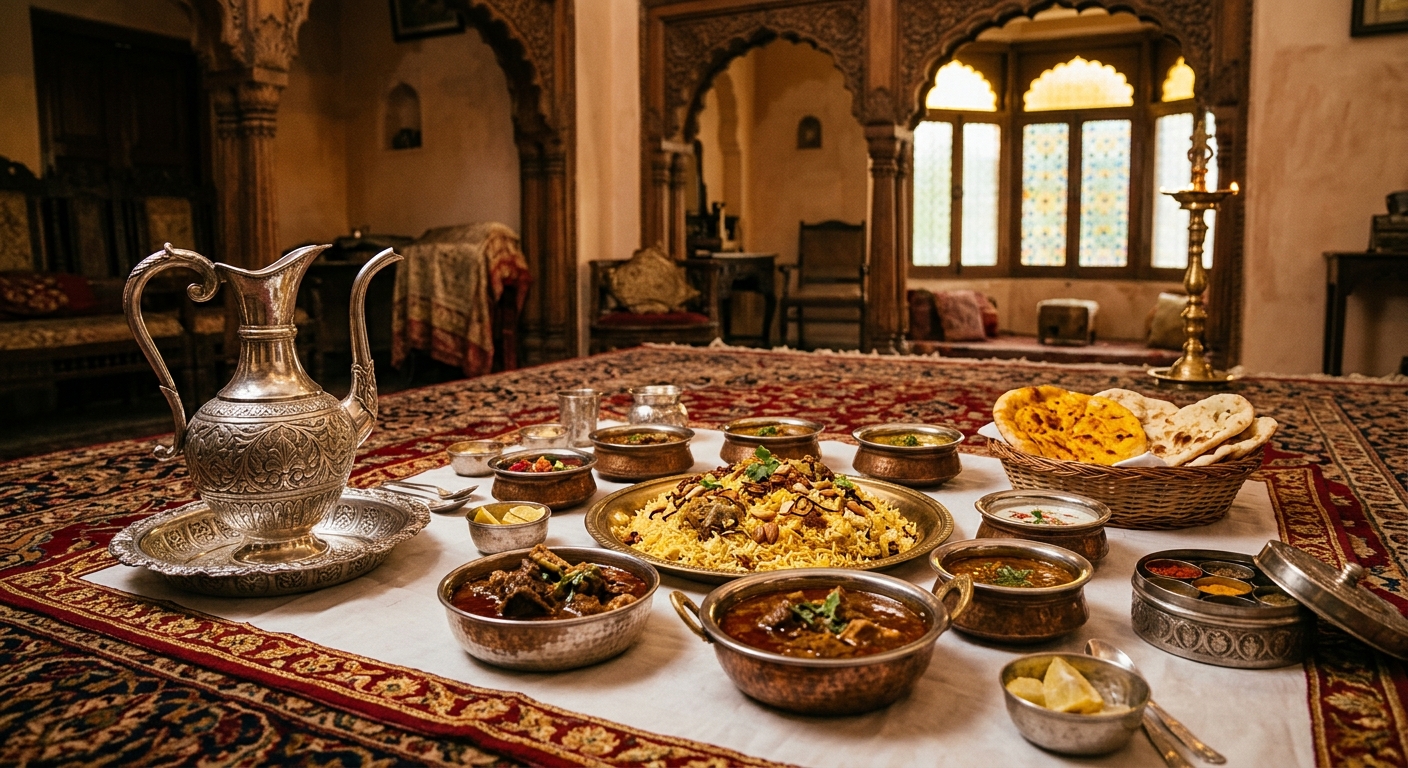
In the culinary heritage of Lucknow, a meal is rarely treated simply as sustenance. It is an art form rooted in tehzeeb (refined manners) and mizbaani (the spirit of hospitality). At the very heart of this cultural ethos lies the dastarkhwan—a dedicated cloth spread upon a low platform or the carpeted floor around which diners gather. The dastarkhwan is both a dining arrangement and an institution governed by centuries of etiquette, communal respect, and structured courses designed to showcase the subtlety of Awadhi cuisine.
The Setting and Pre-Meal Rituals
A traditional Awadhi meal begins long before the first serving dish is placed on the cloth. Guests sit crossed-legged or in the formal do-zanu posture (kneeling upright with feet tucked behind) upon rich floor mats covered with pristine white sheeting (chandni). The dastarkhwan itself is unrolled down the center, flanked by bolster pillows (gao-takiya) to provide comfort for the assembly.
Before eating begins, the ritual of hand cleansing takes place at the seat. Attendants or younger members of the hosting family carry a tasht-nari—an ornate brass or silver basin and pitcher set. Warm, perfumed water is poured over each guest's hands, beginning with the eldest or most honored guest, followed by a crisp towel to dry them. Only once everyone’s hands are cleansed can the feast commence.
The Principles of Adab at the Table
Awadhi dastarkhwan etiquette emphasizes consideration, restraint, and equality among diners. A few core customs govern behavior during the meal:
- Eating with the Right Hand: Food is eaten exclusively using the fingers of the right hand. Tearing bread like sheermal or kulcha gracefully using one hand is considered a hallmark of refined table manners.
- Respecting the Perimeter: Diners are expected to eat strictly from the portion of the communal platter or serving bowl directly facing them, rather than reaching across others.
- The Host’s Vigilance: The host (mizbaan) traditionally keeps watch over every guest's plate. In Awadhi tradition, pressing a guest to take another helping (takalluf) is an expression of affection, but it is balanced by knowing when to yield so the guest is never uncomfortable.
- Synchronized Rising: No guest leaves or washes their hands until everyone at the dastarkhwan has finished. Even if a guest is full, they maintain a polite pace of light nibbling so others do not feel rushed.
The Sequence of Courses in an Awadhi Feast
Unlike Western dining where courses are served sequentially on cleared tables, an Awadhi dastarkhwan often features dishes presented in overlapping waves, allowing diners to pair specific gravies with particular breads and rice preparations. However, the order of tasting follows a deliberate progression.
1. The Kebab Course
The meal traditionally opens with soft, slow-cooked kebabs such as Galawat ke Kebab, Shammi, or Pasande. These are presented alongside delicate accompaniments like mint-coriander chutney, thin onion rings steeped in vinegar, and enriched breads such as sheermal (saffron-infused, milk-kneaded flatbread) or roomali roti. The melting texture of the meat sets the tone for the kitchen’s mastery.
2. The Gravies and Artisanal Breads
The centerpiece of the meal features rich, aromatic curries. Awadhi cuisine favors complex aromatics—such as mace, cardamom, rose water, and kewra—over sharp pungency. Dishes like Awadhi Qorma, Nihari, and slow-braised Salan take center stage, paired with thick, layered leavened breads like kulcha or taftan. Diners use the bread as an edible scoop, absorbing the velvet-smooth sauces without excess spillage.
3. The Rice Preparations
Following the gravies, fragrant rice dishes are introduced. In authentic Lucknow tradition, the Yakhni Pulao holds pride of place—delicate long-grain basmati rice simmered in a spiced mutton broth until every grain is infused with subtle flavor. Awadhi Biryani, layered and cooked on the dum (slow sealed cooking), is served alongside cooling raitas made with mint, pomegranate seeds, or roasted cumin.
4. The Sweet Finish
A celebratory dastarkhwan features a selection of distinct desserts rather than a single offering. Rich preparations such as Shahi Tukda (fried bread soaked in cardamom syrup and topped with reduced milk) and Zarda (sweet saffron rice studded with nuts and khoya) are common for grand occasions. For everyday elegance, earthenware bowls of Phirni or creamy Kheer, decorated with silver leaf (vark), conclude the savory progression.
The Concluding Gestures: Paan and Itr
Once the dishes are removed, the tasht-nari makes a second appearance to allow guests to cleanse their hands. Warm water, occasionally infused with rose petals or lemon slices, removes the rich fats from the fingers.
The ritual concludes with the presentation of the khasdan—a silver container offering carefully folded Meetha Paan (betel leaf filled with gulkand, fennel, and aromatic spices) to aid digestion and freshen the palate. Finally, the host dabs a drop of natural itr (traditional oil-based perfume, such as ruh gulab or shamama) onto the back of the guest's wrist or collar, sending them home enveloped in fragrance and genuine warmth.