Hosting with Awadhi Kebab Platters: Make-Ahead Prep, Marination Timelines, and Classic Dips
By SwaadSathi · · Updated 08 Oct 2026
A practical hosting guide to building an authentic Lucknowi kebab platter, complete with precise marination schedules, advance assembly techniques, and traditional chutney pairings.
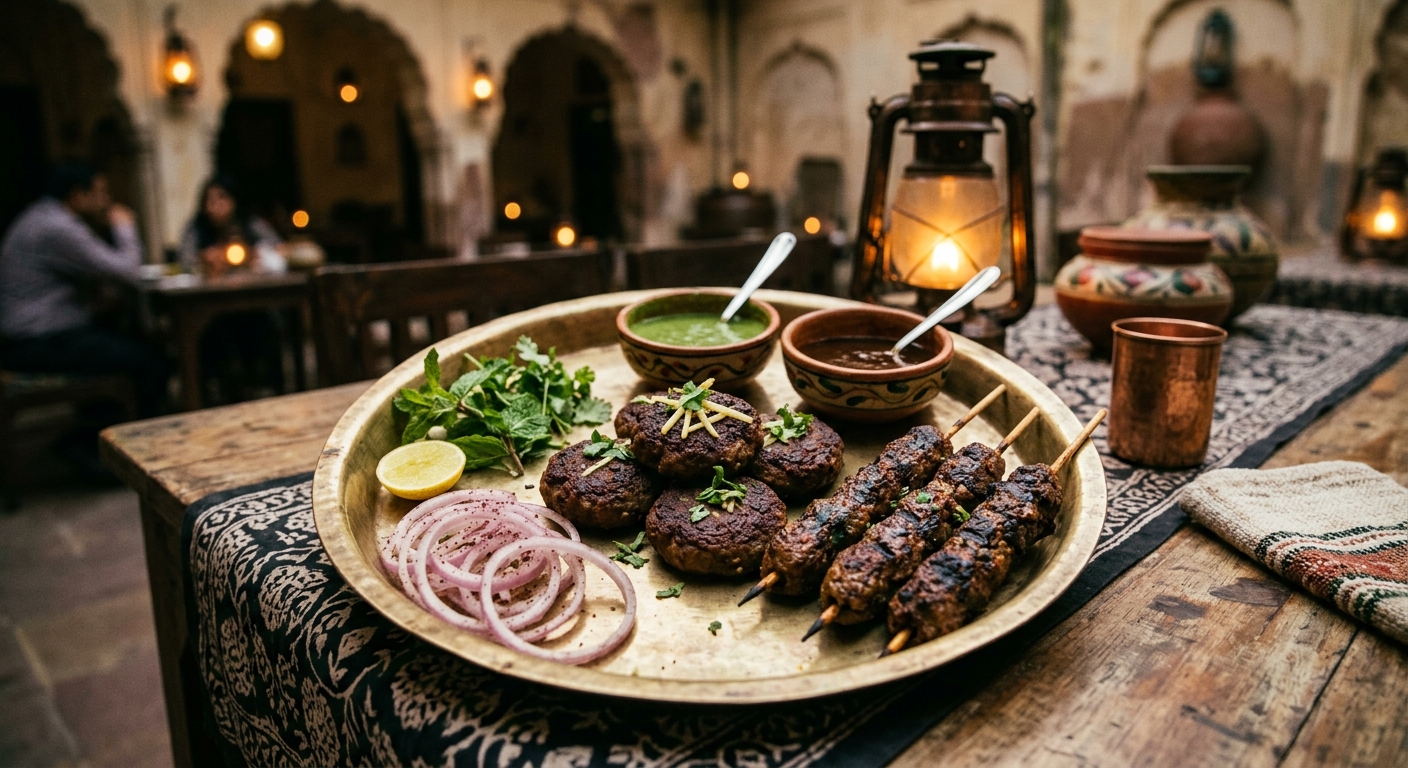
The Anatomy of an Authentic Awadhi Kebab Platter
In Lucknow's culinary heritage, hospitality revolves around the balance of texture, spice subtlety, and aromatics. An Awadhi kebab platter should offer contrast rather than uniform richness. To build a balanced spread, plan for two distinct meat preparations alongside one or two vegetarian options. A classic curation combines melt-in-the-mouth Galawat or Shami kebabs with structured skewers such as Kakori or Seekh kebabs, complemented by tender Boti kebabs. For plant-based diners, Nadru (lotus stem) Shami or smoked Kathal (jackfruit) kebabs provide a remarkably close approximation of traditional textures while absorbing complex spice pastes.
Achieving restaurant-level consistency at home without spending your entire evening behind the stove comes down to managing two foundational elements: enzymatic tenderization and disciplined advance preparation. Awadhi food does not rely on harsh heat; it depends on time, precise spice ratios, and delicate fat-to-meat balances.
Understanding Marination Chemistry and Timelines
The defining characteristic of Awadhi meat cookery is tenderization achieved through enzymatic marinades. Raw papaya paste (kachha papita) contains papain, an enzyme that breaks down tough connective tissue. Using too much papaya paste makes meat mushy, while using too little leaves it stringy. The benchmark ratio is one to two tablespoons of smooth raw papaya paste per kilogram of minced or cubed meat.
For minced preparations like Galawat, allow a marination period between four to eight hours in the refrigerator. Any longer can compromise the structural integrity of the mince, making it difficult to hold together on a pan. For fibrous cuts like mutton chunks intended for Boti kebab, extended marination between eight and twelve hours yields the best texture.
Dairy-based marinades utilizing hung curd, roasted gram flour (besan), and nut pastes (such as cashew or almond) serve as moisture barriers. These should generally be applied after the primary tenderizing phase. When preparing vegetarian alternatives such as paneer or kathal, avoid enzymatic marinades entirely. Paneer requires only two hours in spiced hung curd to absorb aromatics without weeping water, while parboiled kathal benefits from a four-hour soak in ground spice blends and mustard oil.
Make-Ahead Timelines: Two Days to Table
Hosting smoothly requires a reverse schedule that distributes kitchen tasks across forty-eight hours.
Two days before your gathering, procure your meat and aromatics. Have your butcher mince the meat fine, asking for an 80:20 meat-to-fat ratio to ensure the kebabs remain moist without becoming greasy. Blend your aromatic potli masala (a blend featuring green cardamom, mace, clove, and allspice) and roast your besan or chana powder over low heat until nutty. Store these dry components in airtight containers.
One day before the party, execute your marinades. Grind your meat pastes until homogenous, integrate the potli masala, fried onion paste, saffron-infused milk, and tenderizer, and allow the mixtures to rest in the refrigerator. Shape Shami and Galawat kebabs into patties, arrange them in a single layer on parchment-lined trays, cover them tightly with cling wrap, and refrigerate. If you are preparing skewers, thread the seekh mixtures onto metal or soaked bamboo skewers, wrap them, and keep them chilled.
On the day of the event, your primary role shifts from prep cook to short-order finisher. Bring the kebabs out of the refrigerator roughly twenty minutes before cooking so the center reaches ambient room temperature. This simple step prevents the exterior from burning before the core heats through thoroughly.
The Smoking Technique (Dhungar)
A distinctive note of genuine Lucknowi kebabs is the mellow, clean smoke imparted by the traditional dhungar method. This technique can be applied to your raw minced meat mixtures up to twenty-four hours in advance.
Place your seasoned kebab mixture in a large steel or glass bowl. Create a small well in the center and place a small heatproof bowl or a folded piece of aluminum foil inside. Heat a small piece of natural lump charcoal over an open flame until it glows red. Transfer the hot coal into the small bowl, immediately spoon half a teaspoon of ghee or cloves over the ember, and cover the main bowl with a tight-fitting lid or plate. Allow the aromatic smoke to circulate inside for three to five minutes before uncovering and removing the coal. Over-smoking will produce a bitter finish, so keep the exposure brief and controlled.
Essential Dips and Fresh Accompaniments
An Awadhi kebab platter is incomplete without traditional accompaniments that cut through the richness of ghee and meat fat. Traditional Lucknowi feasts avoid heavy, mayonnaise-based dressings, favoring clean, acidic accompaniments instead.
Pudina-Dhania Chutney: Prepare a bright dip by blending equal parts fresh mint and coriander leaves with green chilies, roasted cumin, black salt, and a splash of raw lemon juice. Add a single tablespoon of thick curd to maintain an emulsion without muting the herbal brightness. Avoid garlic in this particular variation, as it can overpower the delicate mace and cardamom present in the kebabs.
Laccha Pyaaz with Sirka: Slice red onions thinly into uniform rings. Soak them in ice water for fifteen minutes to eliminate raw bite and maximize crispness. Drain thoroughly, then toss with fresh lemon juice, julienned ginger, a pinch of degi mirch, and finely chopped green coriander just prior to serving.
Serving Breads: For a complete culinary experience, serve your kebab platter alongside bite-sized Ulta Tawa Parathas or soft Roomali Rotis cut into quarters. The flaky, soft bread acts as an ideal vehicle to hold the tender kebabs and absorb spiced pan juices, rounding out a memorable home-cooked Lucknowi feast.