Lucknowi Tehri: Elevating the Humble Spiced Potato and Mustard Oil Rice Dish into a Staple
By SwaadSathi · · Updated 08 Oct 2026
A detailed culinary guide to Lucknowi Tehri, exploring the history, essential techniques, and delicate spice balance that transform simple potatoes, rice, and mustard oil into an Awadhi household classic.
The Everyday Grace of Awadhi Vegetarian Cooking
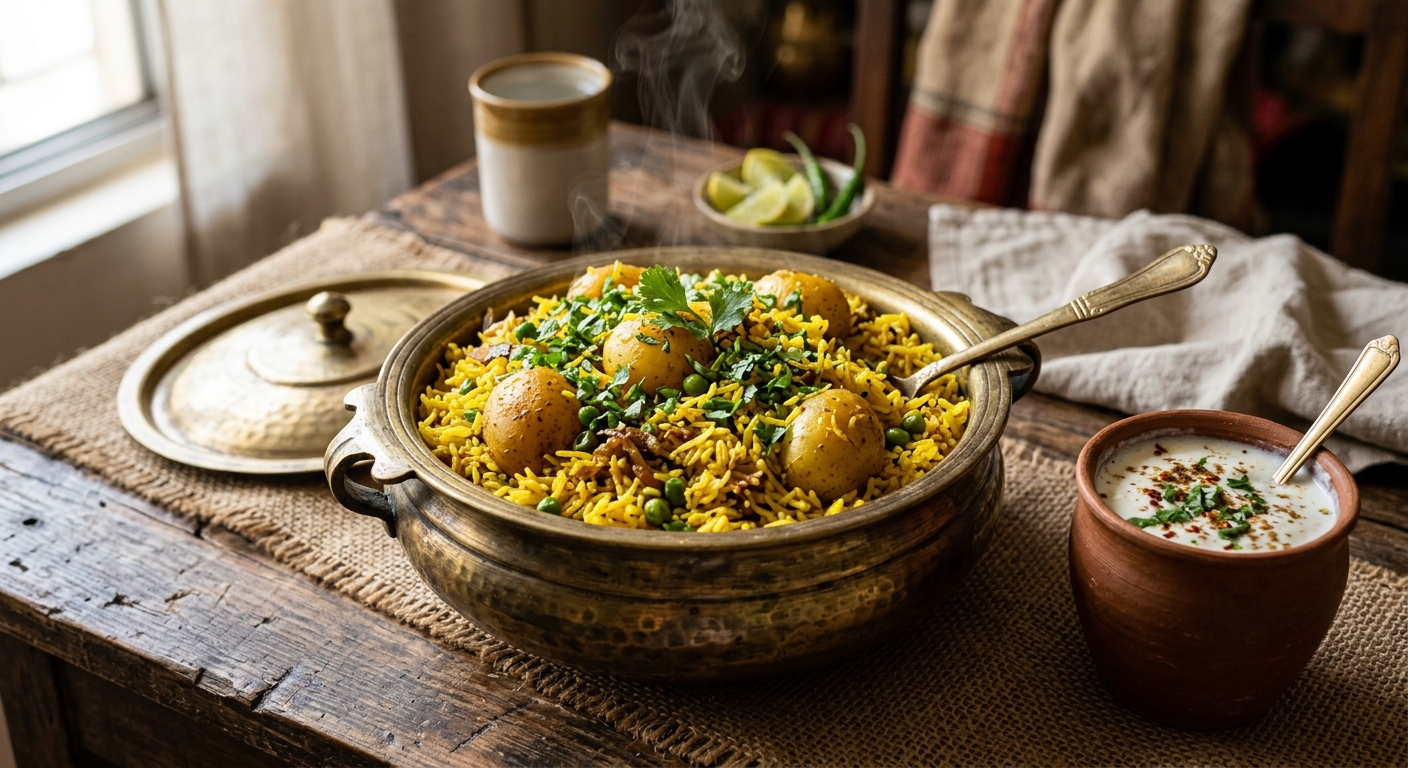
While the culinary legacy of Lucknow is widely celebrated for slow-cooked meat preparations and fragrant biryanis, the city's domestic kitchens preserve an equally sophisticated vegetarian repertoire. Among these home-style dishes, Lucknowi Tehri holds a revered position. Far from an afterthought or a mere substitute for meat pilafs, Tehri is an intentional, deeply comforting one-pot dish where rice and potatoes take center stage, brought together by the robust, pungent character of mustard oil and the golden warmth of turmeric.
In many North Indian households, Tehri represents the comfort of winter afternoons and rainy days. In Lucknow, however, the dish is prepared with precise attention to grain texture, oil tempering, and vegetable integrity. It is distinct from a khichdi because the grains of rice remain separate and firm, yet it differs from a traditional vegetable pulao through its reliance on turmeric, mustard oil, and a bold undercurrent of asafoetida and whole spices.
The Core Anatomy of Lucknowi Tehri
The beauty of an authentic Lucknowi Tehri lies in the harmony of modest pantry staples. Every component plays a distinct role in creating its layered flavor profile.
Mustard oil serves as the foundation. Known locally as sarson ka tel, cold-pressed raw mustard oil gives Tehri its signature sharp aroma. To prevent an overwhelming pungency, the oil is brought to its smoking point and then allowed to cool slightly before whole spices are introduced. This tempering mellows the sharpness while leaving behind an earthy base that defines the dish.
Potatoes are not mere fillers in this preparation; they are treated as the primary protein equivalent. In traditional Lucknow homes, medium-sized potatoes are halved or quartered into generous chunks, often lightly fried or roasted in the spiced oil before the rice and water are added. This step forms a savory exterior that holds the potato together during cooking, preventing it from dissolving into the rice.
Rice selection dictates the final mouthfeel. While long-grain aged Basmati is frequently chosen for festive presentations, daily household Tehri is often prepared using fragrant medium-grain varieties such as Dehraduni or local Uttar Pradesh varieties. The rice must be washed thoroughly to strip excess starch and soaked briefly so that each grain elongates without becoming mushy under the steam.
The Balance of Spices and Seasonal Additions
The spice profile of Lucknowi Tehri is warm, aromatic, and distinctly yellow. High-quality turmeric is non-negotiable, providing both an earthy note and the iconic golden hue that distinguishes Tehri from white pulaos. Whole spices like bay leaves, cloves, black cardamom, and cumin seeds release their volatile oils into the hot fat, establishing the initial aromatic layer.
A pinch of strong asafoetida (hing) is standard practice in Awadhi homes, aiding digestion and imparting an umami-like depth. Ground coriander and a modest measure of red chili powder build body in the masala base. Fresh ginger and green chilies are finely chopped or pounded, cutting through the starch of the potatoes and rice.
During winter months across the plains of Uttar Pradesh, freshly harvested green peas (matar) and small florets of cauliflower (gobhi) are frequently folded into the pot. While these seasonal vegetables are common, purists maintain that the potato must remain the prominent element, ensuring the core character of the dish remains intact.
Traditional Cooking Technique: From Sauté to Dum
Cooking Tehri in the Lucknow style involves a sequence that respects the cooking times of each element.
First, the mustard oil is smoked in a heavy-bottomed pot, usually an iron kadai or a traditional brass handi, before whole spices are tempered. Onions, sliced thinly, are sautéed until they turn translucent to light golden, avoiding the deep browning typical of biryani gravies. The potato pieces are then introduced along with ginger, garlic (if used), green chilies, and powdered spices. They are roasted gently until the oil begins to separate from the masala.
Once the base is aromatic, the soaked and drained rice is added directly to the pot. The grains are gently tossed in the warm spiced oil for a minute, coating each grain with fat to help them remain distinct after boiling. Water is measured carefully—typically in a one-to-two ratio depending on the age of the rice—and brought to a vigorous simmer.
The vessel is then tightly covered, either sealed with a heavy lid or low-cooked on dum over gentle heat. This low-temperature steaming allows the potatoes to become tender to the core while the rice finishes in the trapped aromatic steam. Once cooked, the pot is allowed to rest undisturbed for several minutes before being gently fluffed with a flat ladle.
Serving Traditions and Accompaniments
Lucknowi Tehri is traditionally served piping hot, straight from the cooking vessel. In local homes, it is accompanied by a collection of simple sides that balance its hearty nature.
A bowl of freshly set curd or a lightly spiced raita—such as boondi raita or grated cucumber raita seasoned with roasted cumin powder—provides a cool counterpoint to the mustard oil and warm spices. Pickled green chilies, a wedge of fresh lime, and crunchy sliced red onions dressed in lemon juice are customary table companions.
Crisp roasted papad offers textural contrast, while a small spoonful of pure desi ghee drizzled over the hot Tehri just before eating brings an indulgent finish, rounding off the sharpness of the mustard oil. Through these simple, time-tested combinations, Lucknow elevates a humble pantry dish into an enduring regional classic.