Lucknow’s Winter Breakfast Tradition: Cooking Aromatic Nihari and Crisp Kulcha from Scratch
By SwaadSathi · · Updated 08 Oct 2026
Experience the culinary soul of Awadh with a classic winter breakfast. Here is a step-by-step guide to slow-cooking aromatic Nihari paired with crisp, flaky tawa Kulcha from scratch.
The Morning Ritual of Awadhi Winter
As winter settles across northern India, the historic lanes of Chowk and Akbari Gate in Lucknow wake up to dense mist and the aroma of bubbling cauldrons. Long before the sun cuts through the fog, local cooks tend to large copper vessels called degs, slow-cooking rich cuts of meat into Nihari. Derived from the Arabic word nahar, meaning daybreak, Nihari was originally created as a nourishing dawn meal designed to keep laborers and royalty alike energized through cold mornings. Paired with blistered, crisp kulchas straight from the clay oven, it remains one of the finest breakfast traditions in Indian gastronomy.
Recreating this experience in a home kitchen requires patience and attention to culinary technique rather than specialized commercial equipment. While commercial vendors simmer their pots overnight, home cooks can achieve the same silky emulsion and deep aromatic profile over a few hours using a heavy-bottomed pot or Dutch oven.
Understanding the Anatomy of Nihari
Authentic Lucknowi Nihari differs subtly from its Delhi counterpart. Delhi versions tend to be thicker and darker, relying heavily on deeply caramelized onions and rustic whole spices. Lucknowi Nihari, rooted in the refined royal kitchens of Awadh, emphasizes delicate balance, fragrant potli aromatics, and the use of regional ingredients such as peeli mirch (yellow chili powder) and long pepper (pipli).
The meat selection is paramount. Tender cuts like shank (machhli ka gosht) combined with bone marrow pieces (nalli) yield the rich gelatin necessary to give the gravy its glossy, velvety mouthfeel. As the connective tissues dissolve during slow cooking, they naturally body the broth.
The Core Spice Profiles: Potli Masala and Peeli Mirch
The soul of the dish lies in two spice applications: the base seasoning and the aromatic finish. The base relies on ginger-garlic paste, Kashmiri red chili for hue, and Lucknow’s signature yellow chili powder for sharp, clean heat that does not overpower the palate.
Alongside these, an aromatic bouquet—often tied in a muslin pouch or ground finely—infuses the stew. This blend features green cardamom, black cardamom, cloves, mace (javitri), nutmeg (jaiphal), star anise, fennel seeds, and long pepper. Towards the final stage of cooking, a touch of kewra water or mild rose water lends the characteristic floral top note synonymous with Awadhi cooking.
Step-by-Step: Cooking Aromatic Nihari from Scratch
To prepare approximately four servings, begin by heating mustard oil or pure ghee in a heavy-bottomed pot. Thinly sliced onions are fried until uniformly golden and then removed to be crushed later. In the remaining fat, sear one kilogram of mutton shanks along with marrow bones until the exterior is browned, locking in moisture.
Add equal parts freshly ground ginger paste and garlic paste, sautéing until the raw aroma dissipates. Incorporate turmeric, coriander powder, yellow chili powder, and salt. Return the crushed fried onions to the pot, tossing well to coat the meat in the developing base.
Pour in warm water until the meat is fully submerged. Add the bouquet of ground whole spices (mace, cardamom, fennel, and long pepper). Lower the heat to the absolute minimum, cover with a tight-fitting lid, and let the pot simmer undisturbed for two and a half to three hours, or until the meat is completely tender and pulling away effortlessly from the bone.
Before thickening the gravy, notice the layer of spiced oil floating on top—known as the roghan. Skim off most of this roghan into a small bowl and set it aside; this prevents the fat from being absorbed and lost when the flour slurry is introduced.
To achieve the classic velvety texture, whisk three tablespoons of whole wheat flour or roasted gram flour with water to create a lump-free slurry (aatan). Pour this gradually into the simmering pot while stirring continuously. Allow the stew to bubble gently for another twenty minutes until it thickens to a glossy consistency. Finally, stir in a drop of kewra water and turn off the heat.
Mastering the Crisp Lucknowi Kulcha
A true Lucknowi kulcha differs from the stuffed Punjabi variety. It is leavened, soft inside, layered with fat, and blistered to a crisp exterior. Traditional tandoor ovens provide intense radiant heat, but an iron tawa (griddle) works remarkably well at home.
Combine two cups of refined flour (maida), half a teaspoon of baking powder, a pinch of baking soda, half a teaspoon of sugar, and salt. Knead into a soft, pliable dough using lukewarm milk and two tablespoons of whisked yogurt. Let the dough rest covered for at least one hour.
Divide the rested dough into round portions. Roll out each portion into an oval or circle, smear the surface with softened ghee, fold it in thirds, and roll it out again. This simple lamination technique creates delicate, flaky internal layers. Sprinkle the surface with nigella seeds (kalonji) and press them lightly into the dough.
Heat an unseasoned cast-iron tawa until very hot. Brush the underside of the rolled kulcha with a light coating of water and slap it onto the hot tawa. The water creates steam and sticks the dough to the iron surface. Once bubbles form on top, flip the entire tawa upside down directly over an open flame, moving it in circles so the top of the kulcha roasts, chars slightly, and turns blistered and crisp. Scrape the bread off the griddle and brush generously with clarified butter.
Serving the Morning Feast
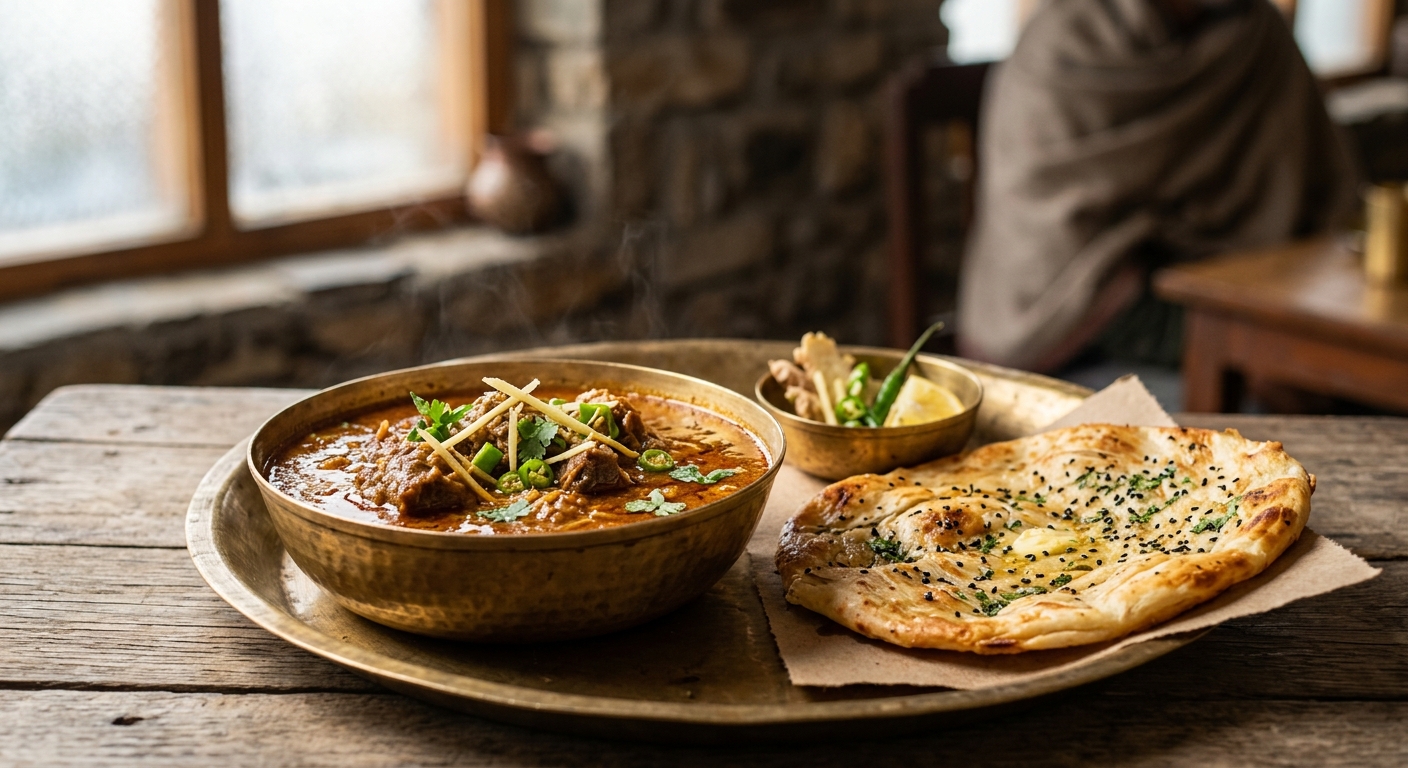
Serve the Nihari in deep bowls. Ladle the reserved warm roghan over the surface to restore its vibrant color. Garnish generously with matchstick-julienned fresh ginger, chopped green chilies, fresh coriander leaves, and a squeeze of lime juice—the acidity cuts through the gelatinous richness of the broth.
Tear into the piping-hot, crisp kulcha and dip it deep into the gravy. This balanced combination of rich slow-cooked marrow, sharp fresh aromatics, and flaky bread captures the enduring warmth of a classic Lucknow winter morning.