Mastering Vegetarian Shami Kebabs: Perfect Chana Dal Texture and Spiced Fillings
By SwaadSathi · · Updated 08 Oct 2026
A definitive kitchen guide to crafting vegetarian shami kebabs with authentic Awadhi finesse, focusing on chana dal moisture management and balanced herb fillings.
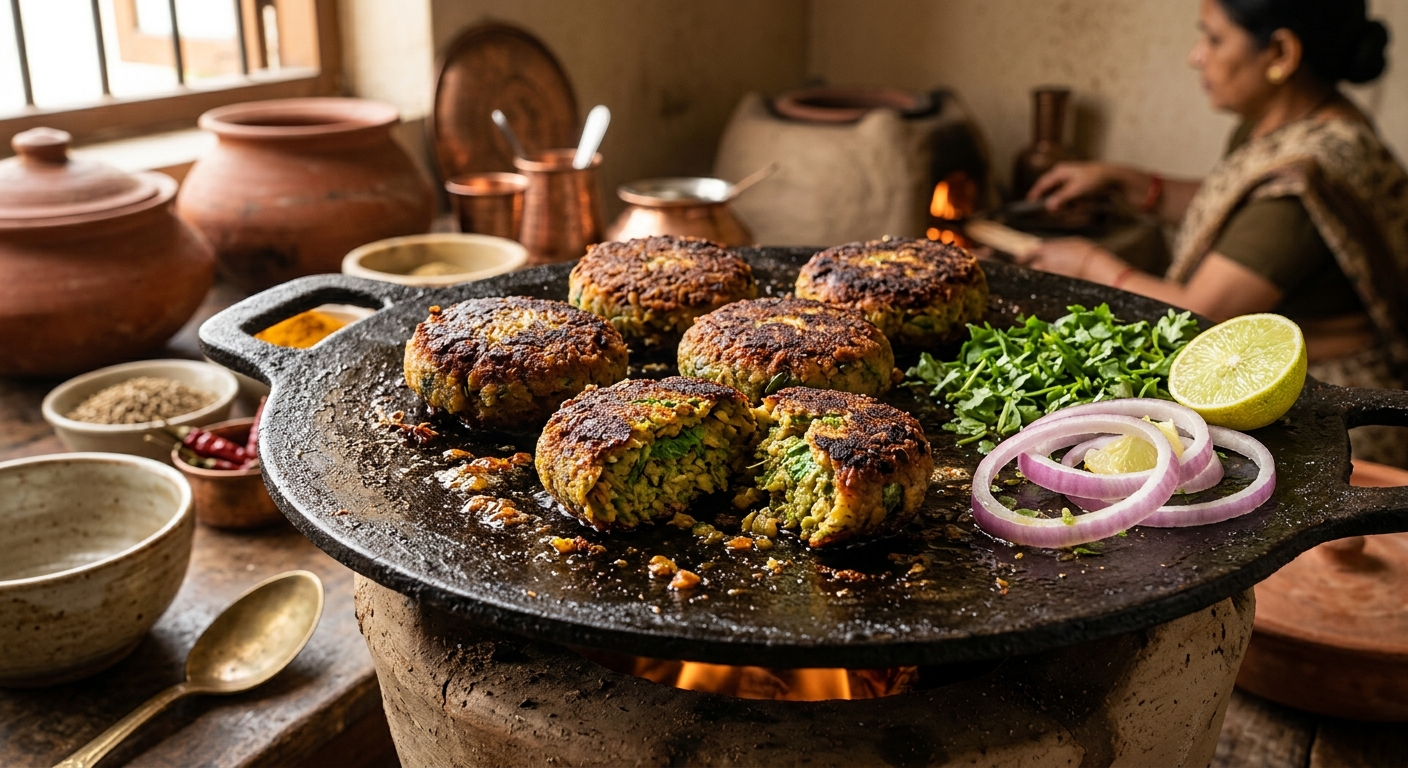
The Anatomy of an Awadhi Vegetarian Shami Kebab
In the culinary tradition of Lucknow, the shami kebab holds a revered status. Known for its melt-in-the-mouth texture and subtle spice layering, the dish traditionally relies on finely minced meat cooked down with split Bengal gram (chana dal). For home cooks preparing a vegetarian adaptation, the challenge lies not in mimicking meat, but in honoring the classic texture: a delicately crisp exterior enclosing a silky, aromatic, and cohesive interior.
Chana dal serves as the structural foundation of a vegetarian shami kebab. When prepared correctly, it provides body, natural starches, and a nutty baseline flavor. However, without precise moisture control and proper spicing, vegetarian variations easily veer toward either dry, crumbly patties or dense, pasty cutlets. Mastering the balance requires understanding how dal hydrates, cooks down, and binds with complementary ingredients.
Selecting the Base and Controlling Moisture
To build a successful base, chana dal must be paired with an ingredient that offers soft fiber and moisture retention. Finely minced raw jackfruit (kathal), boiled raw green bananas (kachha kela), or boiled black chickpeas (kala chana) are traditional choices in Awadhi home cooking. Regardless of the pairing, the way you cook the chana dal determines the final texture.
Soak the chana dal for at least two hours before cooking. The critical step is boiling: the lentils must absorb spices and soften completely without becoming waterlogged. Cook the dal with just enough water to submerge it, accompanied by whole spices such as black cardamom, green cardamom, cloves, cinnamon, bay leaves, dry red chilies, garlic, and ginger. Simmer until the water is completely evaporated and the lentils mash smoothly between two fingers without displaying a hard central grain. If excess liquid remains, evaporate it over high heat before removing the pan from the stove.
The Grind: Achieving the Silken Texture
Traditional Lucknowi kebabs rely on the stone sil-batta to break down the fibers into a smooth, malleable paste without generating friction heat or introducing added water. While modern home cooks typically use a food processor or heavy-duty mixer grinder, the technique must replicate this stone-ground consistency.
Remove woody whole spices like cinnamon bark and bay leaves, but allow soft spices like cloves, softened black peppercorns, and cardamom seeds to remain in the mix. Let the cooked dal and vegetable mixture cool completely to room temperature before grinding. Grinding warm dal releases steam, creating moisture that weakens the structure. Pulse the mixture gradually without adding any water. The resulting mixture should be smooth, pliable, and hold its shape like a soft dough.
Crafting the Herb and Onion Filling (Peti)
A true shami kebab features a distinct internal surprise—a spiced filling known regionally as the peti or bharwan. This center introduces freshness, acidity, and a textural crunch that cuts through the rich, earthy lentil base.
For a balanced Lucknow-style filling, combine:
- Finely diced red onions: Chopped as small as possible to ensure the kebab seals properly without tearing.
- Fresh mint and coriander leaves: Washed thoroughly and dried completely before chopping to prevent water from weeping into the kebab.
- Finely minced green chilies and ginger: For a clean, sharp burst of heat.
- Pomegranate seed powder (anardana) or amchur: Provides a tart, fruit-forward acidity.
- Crumbled paneer or hung curd (optional): Adds creaminess and prevents the onion mixture from drying out during pan-frying.
Lightly salt the filling right before shaping. Adding salt too early draws water out of the onions, which will rupture the delicate casing during cooking.
Shaping and Pan-Frying on the Tawa
Divide the cooled kebab mixture into smooth, golf-ball-sized portions. Lightly grease your palms with mustard oil or ghee. Flatten a portion in the palm of your hand, place a small teaspoon of the spiced filling in the center, and bring the edges upward to enclose it completely. Gently roll it between your palms to smooth out any cracks, then press down slightly to form a round, thick disc.
Shami kebabs must always be shallow-fried, ideally on a seasoned heavy cast-iron tawa. Cooking over excessive heat will char the outer layer before the center warms through, while heat that is too low will allow the dal to absorb excess fat and disintegrate.
Add ghee or mustard oil to the tawa over medium-low heat. Place the kebabs gently onto the pan and leave them undisturbed for two to three minutes. Turning them too early will break the tender crust. Flip only when the underside has developed a deep, uniform golden-brown sear. Cook the second side until equally crisp, then slide the kebabs to the cooler perimeter of the tawa to hold their heat and firm up slightly before serving.
Troubleshooting Common Kebab Pitfalls
The kebabs break on the tawa: This occurs when the mixture contains too much water or lacks a cohesive binder. To fix a loose dough, knead in a tablespoon of roasted gram flour (sattu or roasted besan) or fine roasted oats flour. Avoid raw flour, which produces an unpleasant starchy flavor.
The texture feels rubbery: Over-blitzing the mixture in a high-speed blender can activate starches excessively, creating a glue-like paste. Pulse in short intervals, scraping down the sides, to keep the paste dense yet tender.
The kebabs taste dry: If the mixture is overcooked during the water-evaporation phase, the kebabs can taste chalky. Knead a teaspoon of warm melted ghee into the prepared dough before shaping to restore tenderness and sheen.
Serving in Lucknow Style
Serve the vegetarian shami kebabs hot off the tawa. Complement the rich, spiced profile with thinly sliced red onion rings tossed in lemon juice (laccha pyaaz), a bright mint-coriander chutney, and warm, folded roomali rotis or parathas.