Nimish and Makhan Malai: The Delicate Winter Dew Dessert Tradition of Awadh
By SwaadSathi · · Updated 08 Oct 2026
Known variously as Nimish and Makhan Malai, this ephemeral, cloud-like winter dessert of Lucknow relies on cold night air, morning churning, and fragrant Awadhi aromatics.
The Ephemeral Magic of Lucknow’s Winter Sweet
As the winter chill settles over the historic lanes of Lucknow between November and February, a quiet transformation takes place in the city's traditional sweet shops. Wooden stands and brass platters begin displaying an airy, pale-yellow foam so fragile that a single breath can disrupt its surface. Known locally as Nimish, or frequently referred to as Makhan Malai, this iconic Awadhi dessert is one of the most delicate preparations in Indian culinary heritage.
Unlike dense khoya-based sweets or heavy syrups, Nimish possesses an almost weightless texture. It dissolves on the tongue instantly, leaving behind the faint perfume of saffron, cardamom, and rose water, accompanied by the natural richness of cultured milk fat. Its existence is entirely tied to the weather, making it an authentic seasonal delicacy that cannot be replicated easily during the warmer months.
The Tradition of Dew and the Night Sky
The defining element of traditional Nimish preparation is its reliance on the natural environment. The process begins late in the evening. Full-fat milk, often enriched with fresh cream, is boiled gently and allowed to cool. Artisans then pour the milk into wide, shallow vessels and place them on open rooftops or courtyards under the night sky.
Exposure to the nocturnal drop in temperature and the settling winter dew—historically referred to in Urdu poetry and culinary lore as shabnam—plays a practical physical role. The cool ambient humidity prevents the milk from forming a hard crust while bringing the fat globules to the exact temperature required for aeration. In traditional belief, the dew also imparts an ethereal freshness that modern industrial refrigeration fails to reproduce.
The Dawn Churning Technique
The real physical labor begins before sunrise, often around 4:00 AM, while temperatures remain at their lowest. Churning must be completed before the sun rises and warms the atmosphere, as excess heat causes the whipped foam to collapse back into liquid milk.
Using long wooden churners (known as mathani), the halwais rhythmically agitate the chilled milk. As air is incorporated into the chilled fat, a fine, stable froth rises to the surface. The confectioners carefully skim off this light foam layer by layer, transferring it into wide trays or terracotta plates lined with leaves. Granulated sugar, saffron-infused milk, and crushed green cardamom are incorporated delicately so as not to deflate the structure.
Flavors and Finishing Touches
Awadhi cuisine has long placed an emphasis on perfumery and restraint, and Nimish reflects this heritage cleanly. The dessert is lightly sweetened, ensuring that the natural sweetness of the milk fat remains prominent. It is infused with drops of kewra (screwpine water) or rose water, giving it a subtle floral aroma.
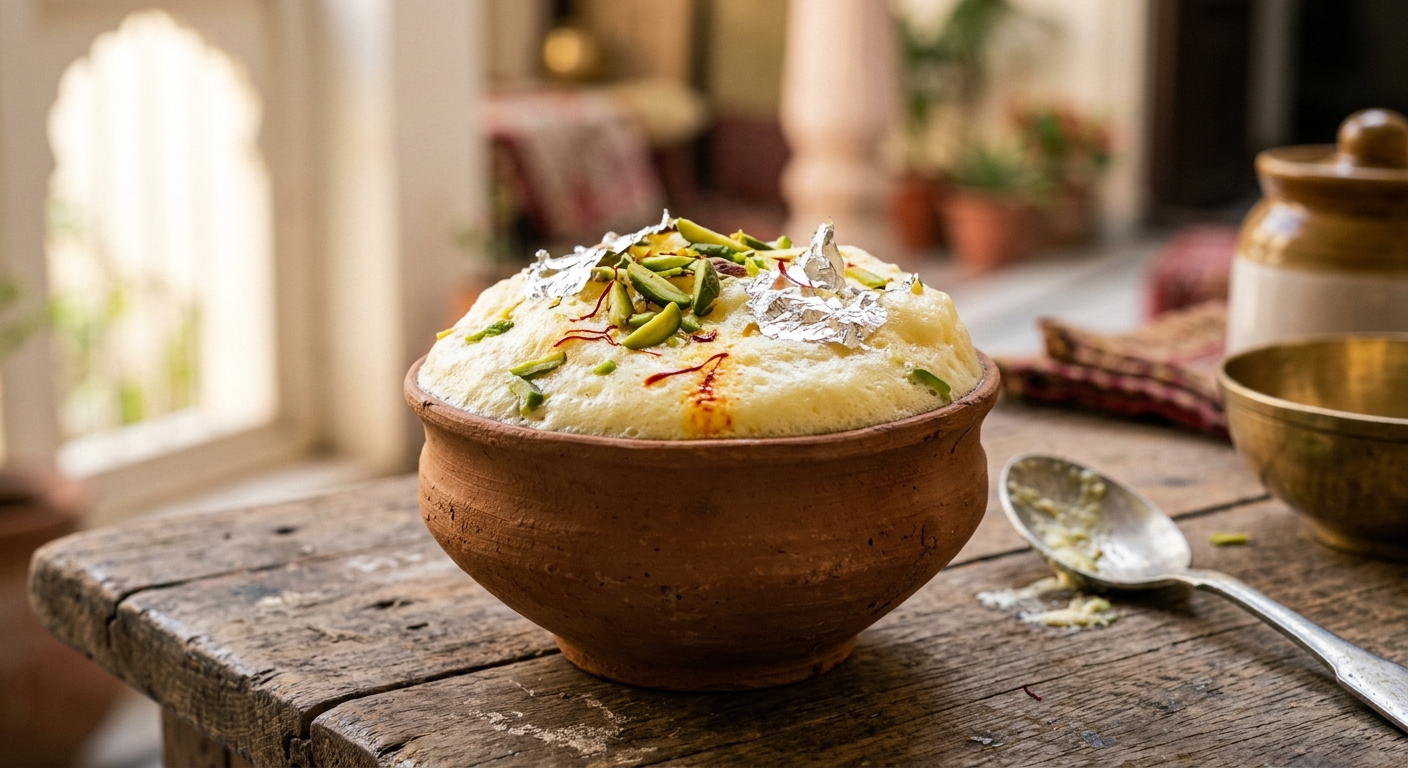
Before serving, the top of the foam is touched with saffron milk, giving parts of the white mound a gentle golden hue. It is finished with a dusting of finely slivered pistachios and almonds, alongside a sheet of chandi ka varq (edible silver leaf). Served in small earthen cups (kulhads) or broad bowls, the dessert retains its cool temperature until consumed.
Understanding the Regional Variants
While Lucknow celebrates this dessert as Nimish or Makhan Malai, related preparations exist across the northern plains of India, shaped by local dairy traditions:
Malayo of Varanasi: Prepared in the narrow alleys of Kashi, Malayo often carries a slightly denser texture and a pronounced saffron tint, frequently served with a spoonful of warm boiled milk poured beneath the foam.
Daulat ki Chaat of Old Delhi: In the walled city of Shahjahanabad, a very similar preparation is churned through winter mornings, often garnished with roasted mawa (khoya) crumble and fine unrefined sugar (bhoora) for contrast in texture.
Despite subtle variations in garnishing and nomenclature, all these regional specialties share the same core foundation: winter milk aerated by hand during cold morning hours.
How to Experience Nimish in Lucknow
To experience Nimish at its peak, one must venture out early. The historic Chowk area of Old Lucknow, particularly near Gol Darwaza and the surrounding bazaars, remains the heart of this trade. Vendors set up their stalls in the early morning, shielding their brass platters under light muslin cloth.
Because the foam is held together purely by cold fat and air bubbles, it begins to soften and liquefy as mid-day approaches and ambient temperatures climb. By noon, the majority of authentic street vendors have sold out their morning yield. Consuming it fresh on a cold Lucknow morning, spooned straight from an earthen bowl, provides a direct taste of an artisanal culinary tradition that has endured for centuries.