Shahi Tukda at Home: Perfecting the Balance of Rabri, Crisp Bread, and Sugar Syrup
By SwaadSathi · · Updated 08 Oct 2026
Shahi Tukda is an enduring pillar of Lucknow's dessert heritage. Discover how to balance slow-simmered saffron rabri, crisp ghee-fried bread, and spiced syrup for an authentic Awadhi finish.
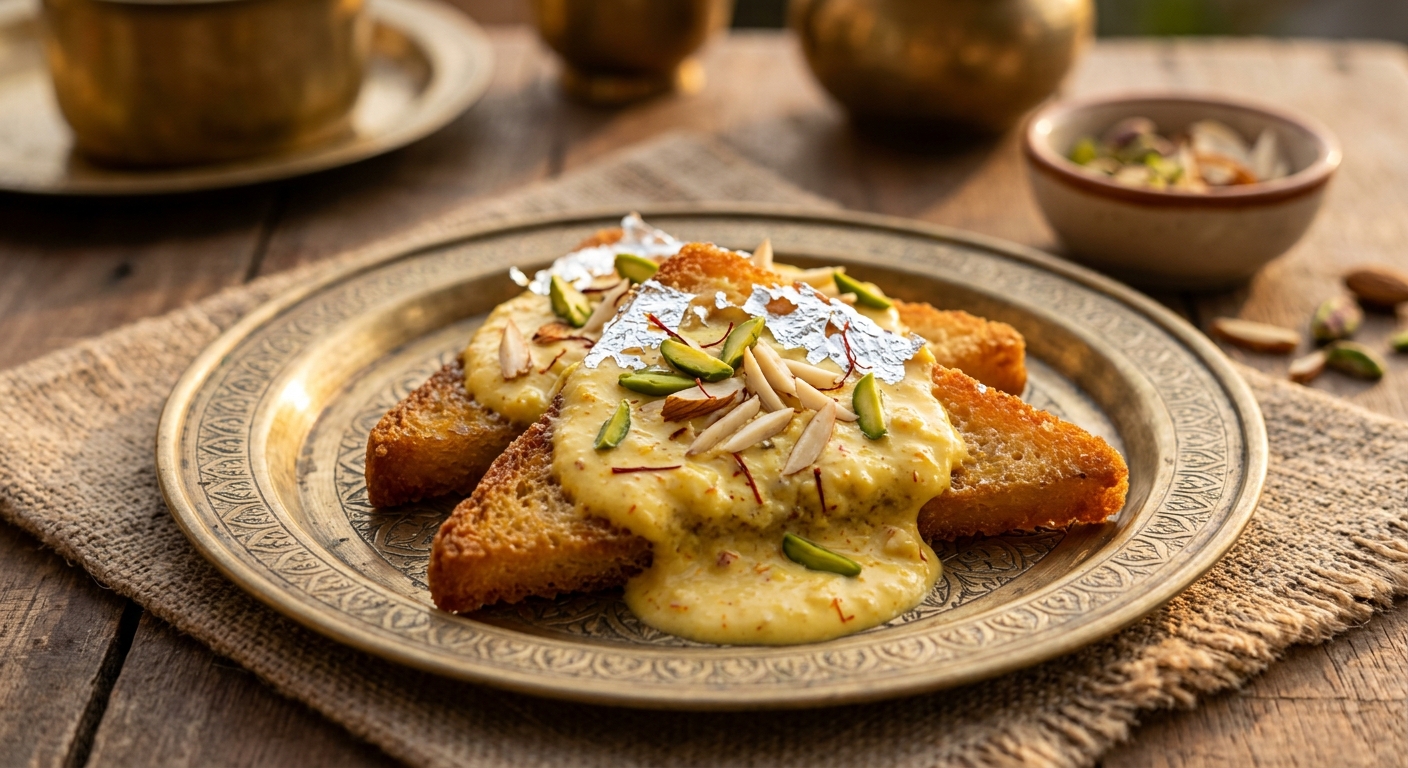
The Architecture of an Awadhi Classic
In the culinary tradition of Lucknow, Shahi Tukda holds a distinct place among royal desserts. Often associated with festive banquets and Dastarkhwans, this sweet dish requires meticulous attention to contrast. A successful Shahi Tukda depends entirely on the equilibrium between three separate components: an aromatic reduced milk (rabri), deeply crisped bread fried in pure ghee, and a fragrant, lightly spiced sugar syrup (sheera). When prepared haphazardly, the dish risks turning into a heavy, soggy mush. Handled with patience and proper temperature management, it offers a sophisticated interplay of crackling texture, warm floral aromas, and dairy richness.
Pillar One: Crafting the Saffron Rabri
The foundation of Shahi Tukda is the rabri, a thick, reduced milk sauce that coats the pastry. Because the bread itself is soaked in sugar syrup, the rabri must remain understated in its sweetness to prevent the dessert from becoming cloying.
To make the rabri, use full-fat buffalo or whole cow milk. Bring the milk to a boil in a heavy-bottomed kadai or wide pan, then reduce the heat to low. As the milk simmers, gently move the layer of cream (malai) that forms on the surface toward the sides of the pan. Continue this reduction process until the liquid volume decreases by roughly two-thirds, yielding a rich, granular consistency.
Infuse a pinch of crushed saffron threads directly into two tablespoons of warm milk for twenty minutes before adding it to the simmering reduction. Saffron provides both the characteristic pale-gold hue and an earthy floral backdrop. Finish with freshly ground green cardamom powder. Keep the added sugar minimal—no more than one or two tablespoons per litre of milk—allowing the dairy's natural sweetness to lead.
Pillar Two: The Bread and the Ghee Fry
The choice of bread dictates the structural integrity of the dish. Modern sliced sandwich bread with high moisture and soft crumb often disintegrates during assembly. Instead, select a sturdy, plain white loaf, preferably a day old, which has dried slightly on the counter. The lower moisture content ensures that the bread absorbs less fat while crisping uniformly.
Trim the crusts neatly and slice each piece into neat triangles or batons. While shallow frying is possible, deep frying in clarified butter (desi ghee) at a regulated medium-low temperature yields the best results. Ghee imparts an essential nutty aroma that neutral vegetable oils cannot replicate.
Fry the bread slices slowly, turning them occasionally until they reach a deep, uniform golden-brown shade. Rushing this stage with high heat leaves the center soft and spongy, which causes the bread to collapse into sludge once dipped into the sugar syrup. The bread must be crisp through its core. Once fried, drain the pieces vertically on a wire rack rather than resting them flat on paper towels, allowing excess ghee to run off without steaming the crisp exterior.
Pillar Three: The Fragrant Sugar Syrup
The sugar syrup serves as the flavor bridge between the fried bread and the rabri. It must be viscous enough to coat the bread without turning it into a soggy sponge.
Prepare the syrup using equal parts granulated white sugar and water. Bring the mixture to a rolling boil over medium heat until the sugar dissolves completely. Continue simmering until the syrup reaches a half-string or slightly sticky consistency—it should feel tacky between your thumb and forefinger, similar to honey diluted with warm water, without forming a brittle candy thread.
Perfume the syrup with cracked green cardamom pods and a few drops of pure kewra (pandanus) water or rose water just as you take the pan off the heat. Lucknowi preparations frequently favor kewra for its delicate, cooling aroma, which cuts through the richness of ghee and reduced milk.
The Critical Soaking and Assembly Technique
Timing during assembly determines whether the fried bread retains its characteristic bite:
- Check Temperatures: The sugar syrup should be comfortably warm, not boiling. If the syrup is boiling hot, the bread will absorb too much liquid instantly and lose its crispness. The fried bread should be at room temperature.
- Perform a Swift Dip: Submerge each fried bread slice into the warm syrup for roughly five to eight seconds per side. Use tongs to lift the slice out, holding it over the pan for a moment to let excess syrup drain away.
- Base Layering: Arrange the glazed bread slices in an overlapping pattern on a shallow serving dish.
- The Rabri Crown: Ladle the warm or room-temperature saffron rabri generously over the center of the bread, leaving some of the pointed golden edges exposed to showcase the crisp crust.
- Garnish: Finish the presentation with blanched, slivered pistachios and almonds. Edible silver leaf (varq) can be applied for traditional visual presentation.
Serving and Storage Notes
Shahi Tukda is best served within an hour of assembly, while the bread still maintains a distinct contrast between its syrup-glazed crust and the velvety rabri blanket. If you need to prepare the dish in advance for a gathering, keep all three elements separate. Store the reduced rabri in the refrigerator, keep the fried bread in an airtight container at room temperature, and re-warm the syrup slightly before the quick dip and final plating.