The Art of Galouti Kebab: Traditional Spices and Tenderising Techniques for Home Kitchens
By SwaadSathi · · Updated 08 Oct 2026
Explore the culinary science and culinary heritage behind Lucknow's iconic Galouti Kebab. Learn traditional meat-tenderising methods, spice blending techniques, and how to replicate the melt-in-the-mouth texture in your home kitchen.
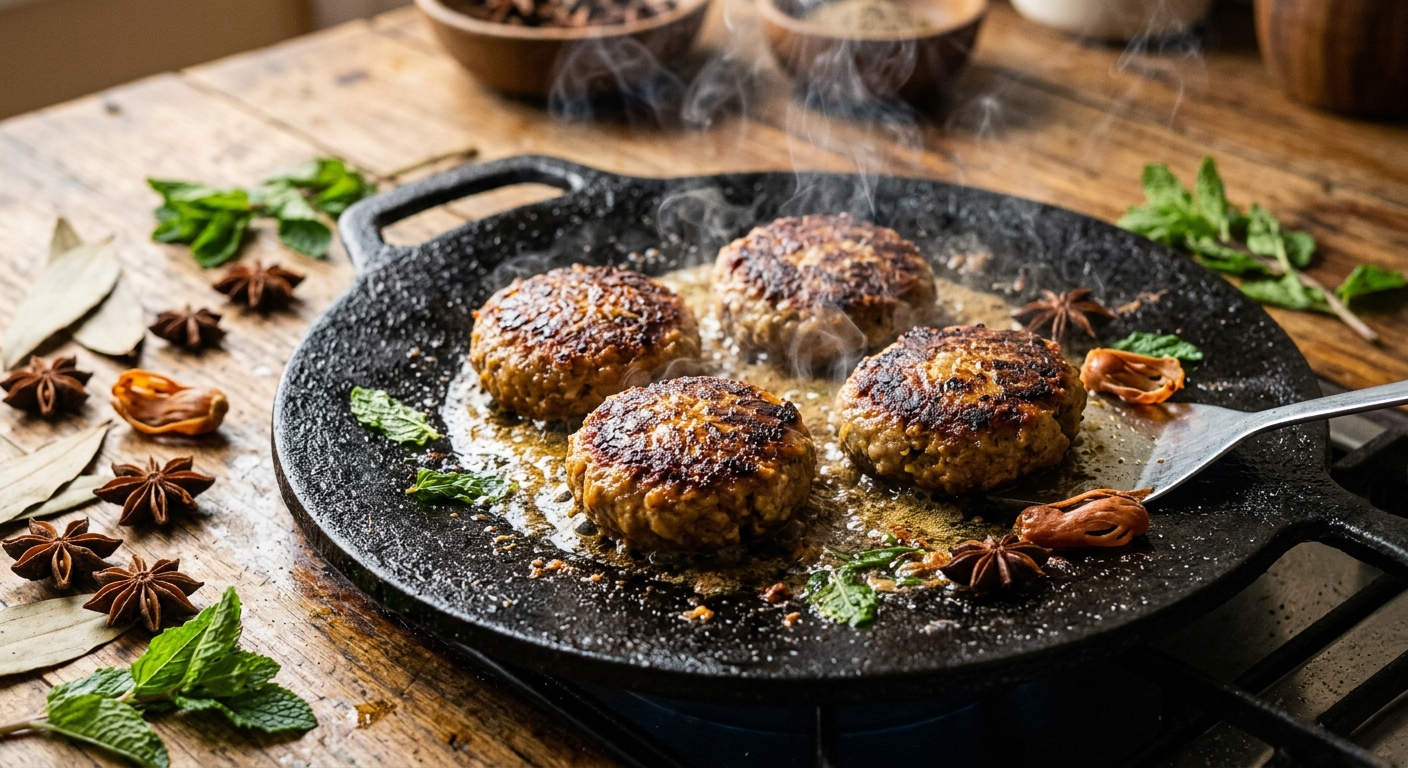
The Royal Legacy of the Galouti Kebab
Originating in the royal kitchens of Lucknow, the Galouti kebab (often spelled Galawat kebab) holds a revered status in Awadhi cuisine. Culinary tradition attributes its creation to the chefs of Nawab Asad-ud-Daula, who sought a meat preparation so supple that it required no chewing. The word 'Galouti' itself stems from galawat, which refers to the softening or tenderising process of meat. Achieving this signature velvety texture demands more than just standard mincing; it relies on biochemical tenderisation, precise fat ratios, and an intricate balance of fragrant spices.
The Core Tenderising Science: Raw Papaya and Texture
The hallmark of an authentic Galouti kebab is a paste-like consistency that holds its shape on a hot griddle yet dissolves effortlessly on the palate. In Awadhi kitchens, this is achieved using raw, unripe green papaya (kachcha papita).
Green papaya contains papain, a naturally occurring proteolytic enzyme that actively breaks down tough connective tissue and muscle fibres in minced meat (typically goat or lamb). To apply this technique at home:
- Keep the skin intact: Wash the raw green papaya thoroughly and grind it with the green skin on, as the highest concentration of active papain resides just beneath the peel.
- Maintain precise proportions: Use roughly 30 to 40 grams of fresh raw papaya paste per 500 grams of finely minced meat. Excessive papaya can degrade the meat past the desired texture, turning it unpleasantly mushy.
- Resting time: Allow the mince and papaya mixture to marinate in the refrigerator for at least 4 to 6 hours, or ideally overnight, giving the enzymes sufficient time to soften the protein matrix.
- Fine grinding: Traditionally worked on a stone slab (silbatta), home cooks can achieve a smooth texture by pulsing the marinated mince multiple times in a heavy-duty food processor until it forms a uniform, pliable paste.
The Aromatic Foundation: Potli Masala and Lazzat-e-Taam
Unlike kebabs that rely heavily on sharp heat from fresh chillies, the Galouti profile is defined by perfumed warmth and gentle spices. Awadhi master chefs (Bawarchis and Rakabdars) guard their spice blends closely, often employing blends known historically as Lazzat-e-Taam or Potli Masala.
A balanced spice blend for home preparation relies on several distinct categories of aromatics:
- Warm florals: Dried rose petals (gulab ki patti), mace (javitri), and green cardamom (chhoti elaichi).
- Deep resins: Star anise (badian khatai), cloves (laung), and black cardamom seeds.
- Piquant accents: Kabab chini (allspice or cubeb pepper), which lends a distinct camphorous and peppery note that sets Awadhi kebabs apart.
- Earthy undertones: Stone flower (patthar ke phool) and a light grating of fresh nutmeg (jaiphal).
Lightly warm these whole spices on a dry pan just until fragrant, cool them thoroughly, and grind them to a fine powder before sifting. Adding a dash of kewra water (pandanus extract) and rose water during the final kneading step imparts the nostalgic scent of old Lucknow.
Binding, Fat, and the Dhungar Smoke Infusion
Lean meat alone will yield a dry, crumbly kebab. Traditional recipes incorporate mutton fat (around 15 to 20 percent of the total meat weight) directly into the mince. Fat carries the fat-soluble compounds of the spices and prevents the kebabs from drying out during cooking.
To bind the mixture without altering its delicacy, use roasted gram flour (bhuna besan) or roasted chickpea flour (sattu). Add it sparingly—approximately two tablespoons per 500 grams of meat—along with browned onion paste (barista paste) and a modest measure of thickened yogurt or cashew paste for richness.
Before shaping, impart the essential smoky layer using the traditional Dhungar method:
- Place the finished kebab mixture in a wide bowl and create a well in the centre.
- Place a small heatproof bowl or a folded piece of foil in the well.
- Heat a piece of natural lump charcoal until glowing red, then place it inside the small bowl.
- Drop half a teaspoon of ghee and two cloves directly onto the hot coal.
- Cover the entire bowl immediately with a tight-fitting lid to trap the aromatic white smoke for 3 to 5 minutes. Do not exceed this duration, as prolonged smoking can turn the mixture bitter.
Cooking on the Mahi Tawa
In Lucknow's culinary tradition, Galouti kebabs are cooked on a large, flat concave griddle known as a Mahi Tawa using pure desi ghee. At home, a heavy cast-iron skillet or flat griddle serves as the best substitute.
Because the mixture is exceptionally delicate, do not attempt to form firm round patties with a rolling pin. Wet your palms with cold water or grease them with ghee, scoop a lime-sized portion of the mixture, and place it directly onto the preheated, ghee-coated pan. Gently flatten the mound with the back of a spoon or your fingertips.
Cook over medium-low heat. Avoid flipping prematurely; let the underside develop a deep golden-brown crust that can support the soft interior. Carefully turn the kebab using a thin, flat spatula and cook the other side until browned and glistening. Total cooking time usually ranges from 3 to 4 minutes per side.
Serving the Awadhi Way
A true Lucknowi Galouti kebab is customarily served atop warm Ulte Tawe ka Paratha—a thin, flaky Awadhi flatbread cooked on the inverted curve of an iron griddle. Complement the rich flavours with fine rings of red onion tossed in lemon juice and a fresh coriander-mint chutney. By respecting the natural enzymatic tenderisation and balancing the aromatics, you can recreate the regal culinary heritage of Lucknow directly in your home kitchen.