The Art of Preparing Traditional Awadhi Pasanda: Cuts, Marinade, and Slow Cooking
By SwaadSathi · · Updated 08 Oct 2026
A culinary guide to preparing authentic Awadhi Pasanda—from selecting and flattening prime cuts of meat to balancing rich browned onion pastes, velvety curd, and fragrant warm spices.
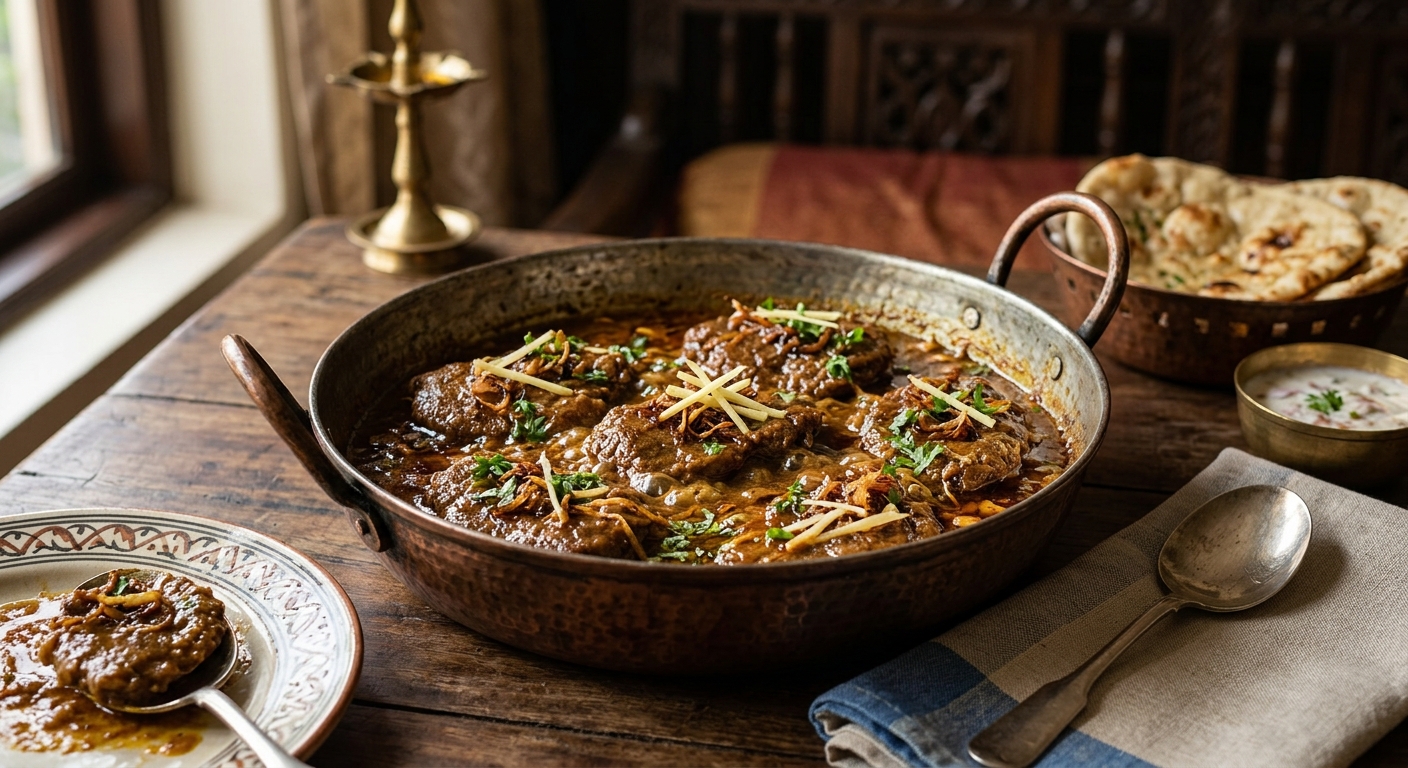
The Essence of the Awadhi Pasanda
In the culinary repertoire of Lucknow, few dishes represent refined meat craft quite like the Pasanda. Derived from the Urdu word pasand, meaning 'choice' or 'favourite', the dish historically earned its name from the butcher's selection of the finest, most tender cuts of meat. Rather than chunking meat into uniform cubes for curries, the preparation of Pasanda requires deliberate butchery and a dedicated technique: slicing prime cuts thin and pounding them flat so they absorb marinades deeply and turn meltingly tender during cooking.
Rooted in the royal kitchens of Awadh, a true Pasanda does not rely on intense chili heat or heavy tomato gravies. Instead, its character is defined by the depth of browned onions (tali pyaz), the acidity of hung or whisked curd, the gentle richness of nut and seed pastes, and a perfumed bouquet of warm, aromatic spices like green cardamom and mace.
Selecting and Flattening the Meat
The foundation of an authentic Pasanda begins with the cut. Traditionally prepared with mutton or goat meat, the ideal cuts come from the leg (the top round or silverside) or tender loin fillets, where the muscle grain is long and uniform. Boneless cuts are essential.
To prepare the cuts, slice the meat across the grain into thin fillets, approximately one-quarter of an inch thick. Once portioned, the meat must be physically tenderized. Place each cut between sheets of parchment paper or clean cling wrap and gently flatten it using a flat meat mallet or the broad side of a heavy cleaver. The objective is not to pulverize or tear the flesh, but to gently loosen the muscle fibers and flatten the cuts to an even thickness. This mechanical tenderization creates pockets that trap moisture and allows the marinade to penetrate past the surface layer.
The Dual-Stage Marination
Marination in Awadhi cuisine is a layered craft rather than a single step. For Pasanda, a two-phase marination delivers the best texture and depth of flavour.
The initial tenderizing stage focuses on gentle enzymatic breakdown. Flattened mutton cuts are rubbed with a small measure of raw papaya paste (kaccha papita), fine salt, and fresh ginger-garlic paste. Because raw papaya contains the potent enzyme papain, moderation is key—roughly one tablespoon per kilogram of meat is sufficient. Over-marinating with raw papaya can dissolve the structural integrity of the meat, leaving it mushy. A brief rest of thirty to forty-five minutes at cool room temperature allows the enzymes to relax the proteins while preserving the integrity of the cut.
The second stage introduces the primary body of flavour. Whisked, full-fat curd forms the base, lending clean dairy tang and moisture. This is combined with deeply browned onions, fried evenly to a deep amber hue and ground with a splash of water into a rich paste. The browned onion paste provides the hallmark savory-sweet foundation and warm brown color that characterizes an Awadhi preparation.
Building the Spice Profile
The spice architecture for a traditional Lucknowi Pasanda emphasizes warmth, floral fragrance, and subtle earthiness rather than assertive heat. Whole spices are lightly toasted to activate their essential oils before being milled into a fine powder.
Key elements of the Pasanda spice blend include:
Green cardamom (chhoti elaichi) provides a bright, sweet floral lift, which is anchored by the deep, musky warmth of mace (javitri) and a modest touch of nutmeg (jaiphal). Cloves (laung) and black peppercorns add a rounded, background heat that warms the palate without scorching it. Mild Kashmiri red chili or yellow chili powder (peeli mirch) imparts subtle color and piquancy. Roasted cumin and shahi jeera (caraway) lend an earthy base note that balances the richness of the dairy.
To give the gravy its signature body and silky sheen, Awadhi cooks fold a finely ground paste of soaked cashews, blanched almonds, or poppy seeds (khus khus) into the curd marinade. This paste acts as a natural emulsifier, binding the dairy fat and rendering juices during cooking.
The Cooking Method: Lagan and Slow Simmering
Pasanda is best cooked in a wide, shallow, heavy-bottomed copper or cast-iron pan known as a lagan. The broad surface area allows the flattened cuts to lie relatively flat in a single or semi-overlapping layer rather than piling up, which would cause them to steam unevenly.
Warm a generous measure of pure ghee in the lagan. Add whole aromatics—a few cracked green cardamoms, a bay leaf, and a small cinnamon stick—until they turn fragrant. Carefully lay the marinated meat cuts into the hot ghee. Sear the cuts gently on medium heat for several minutes to set the exterior without scorching the dairy or nut solids. Once the meat releases its moisture, pour in any remaining marinade from the bowl.
Lower the heat to a gentle simmer. Cover the pan with a tight-fitting lid to trap the aromatic steam. The meat will braise slowly in its own released juices, the rendered ghee, and the rich marinade. Simmer for forty-five minutes to an hour, checking periodically to ensure the bottom does not catch. As the water evaporates, the gravy will cling to the flattened cuts, and the ghee will begin to separate along the edges of the pan (rogan).
Finishing and Serving
To conclude the preparation in authentic Lucknowi style, finish the dish with a whisper of kewra water (screw-pine essence) or culinary rose water, and a pinch of freshly ground cardamom and mace powder. Stir gently to avoid breaking the delicate, tenderized cuts of meat.
Mutton Pasanda is traditionally served warm alongside Awadhi breads that can capture its velvety, concentrated sauce. Rich, saffron-tinged Sheermal, delicate Roomali Roti, or flaky Warqi Paratha make classic partners. Accompany the meal with crisp onion rings tossed in lemon juice and fresh mint sprigs for an elegant, balanced dastarkhwan.