Ulte Tawe Ka Paratha: Step-by-Step Dough Preparation and Baking on an Inverted Griddle
By SwaadSathi · · Updated 08 Oct 2026
Discover how to prepare authentic Lucknowi ulte tawe ka paratha at home, from enriched dough kneading to the technique of baking on an inverted convex griddle.
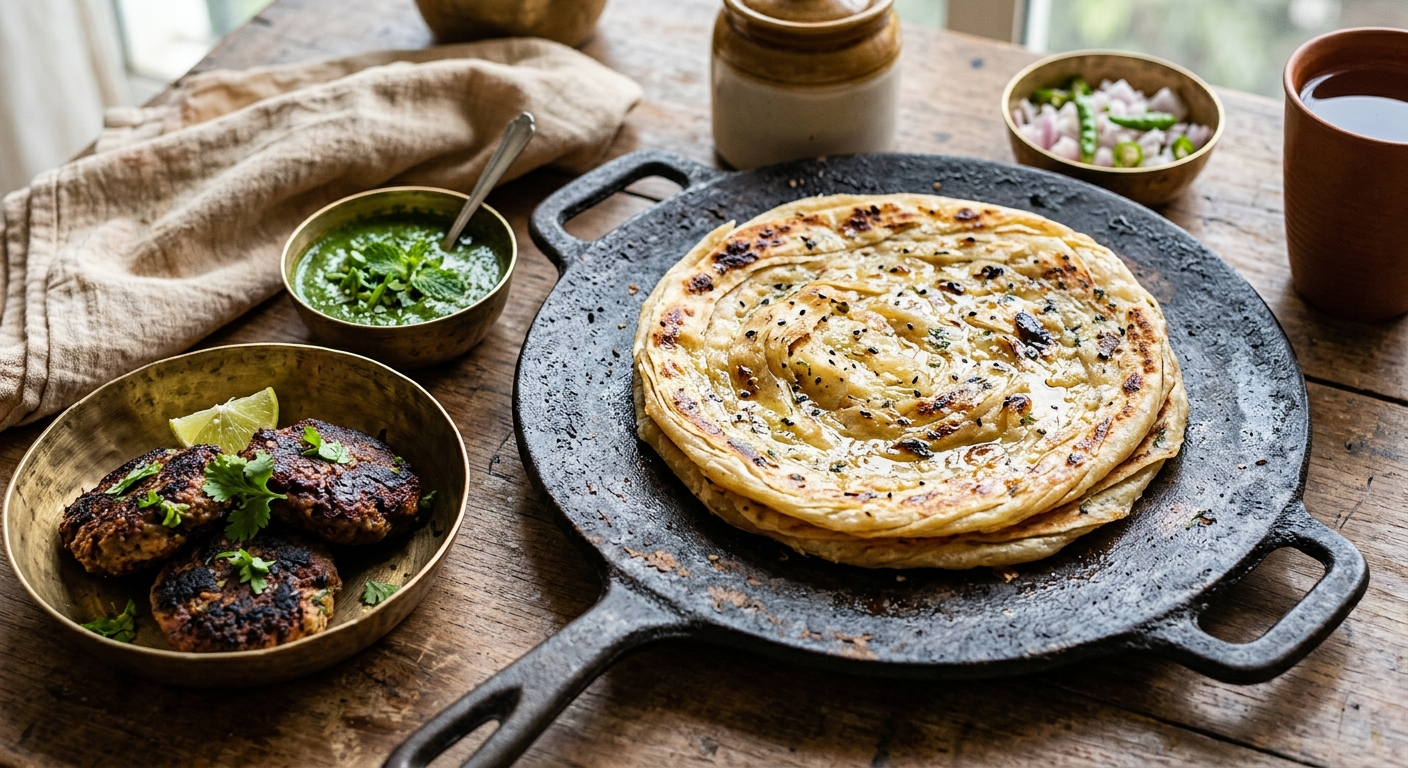
The Heritage of Lucknow's Ulte Tawe Ka Paratha
In the culinary landscape of Lucknow, bread making is an art form refined over centuries in royal Awadhi kitchens. While the tandoor is synonymous with Punjabi flatbreads, Awadhi cuisine relies extensively on precision griddles. Among its most celebrated breads is the ulte tawe ka paratha—a velvety, layered flatbread famously paired with tender Galawat and Kakori kebabs. Unlike everyday tawa parathas, this bread is baked on the domed, convex surface of an inverted griddle (ulta tawa), creating an extraordinarily soft texture with delicate, crisp golden spots.
Understanding the Inverted Griddle Technique
The traditional ulta tawa resembles an inverted shallow wok or a custom-made domed iron pan. Cooking on a convex surface changes heat transfer significantly. Gravity allows the thin, enriched dough to drape naturally over the hot metal, preventing uneven bubbling and ensuring rapid, uniform contact. Because the bread cooks primarily with ambient dry heat and residual steam trapped within its laminated folds, the crumb stays remarkably tender without drying out into a hard crust.
Key Ingredients and Dough Composition
The foundation of a good ulte tawe ka paratha lies in enriching the flour. Unlike rustic whole wheat rotis, this paratha demands high elasticity and richness to achieve its hallmark melt-in-the-mouth texture.
- Refined Flour (Maida): High-gluten white flour provides the structural elasticity required to roll and stretch the dough paper-thin without tearing.
- Whole Milk: Kneading with warm milk instead of water tenderizes the gluten strands, keeping the bread soft even after cooling.
- Desi Ghee: Ghee is incorporated both into the dough (moyen) and between layers during lamination for rich flakiness.
- Sugar and Salt: A pinch of fine sugar aids in Maillard browning over the dry iron surface, while salt balances the flavors.
- Aromatics (Optional): A few strands of saffron steeped in warm milk or a drop of kewra water lend the distinct royal Awadhi profile.
Step-by-Step Dough Preparation
Proper kneading and resting are essential to develop the gluten network while maintaining tenderness.
Begin by sifting 500 grams of maida into a broad mixing vessel (parat). Add one teaspoon of fine salt and one teaspoon of powdered sugar. Rub in three tablespoons of melted desi ghee with your fingertips until the flour resembles coarse sand. If using saffron or kewra, blend it into 250 milliliters of lukewarm whole milk.
Gradually pour the milk into the flour, bringing the mass together. Add lukewarm water in small increments as needed. Knead for at least 8 to 10 minutes until you achieve a very soft, smooth, and pliable dough. It should be distinctly softer than standard chapati dough, yielding easily when pressed. Coat the surface with a teaspoon of ghee, cover with a damp muslin cloth, and rest for a minimum of 45 minutes to an hour. This resting stage allows the gluten to relax completely, which prevents the dough from snapping back during rolling.
Lamination and Shaping
Divide the rested dough into smooth, lemon-sized balls. Work with one portion at a time while keeping the remaining portions covered.
Dust the rolling surface lightly with flour. Roll the dough ball out as thinly as possible into an oval or circle. Brush the entire exposed surface with a thin layer of melted ghee and lightly dust with a pinch of dry flour. Create folds by pleating the sheet accordion-style from one end to the other, or roll it tightly into a long cylinder. Coil the pleated strip inward into a spiral disc (similar to a lachha paratha base) and tuck the tail underneath. Let these spiral pedas rest for 10 minutes before the final rolling.
Gently roll out each spiral into a disc approximately 7 to 8 inches in diameter. Avoid applying heavy downward pressure with the rolling pin; light strokes preserve the layered internal structure.
Baking on the Inverted Griddle
To recreate this at home without commercial equipment, invert a heavy-bottomed cast iron kadai or a traditional cast-iron tawa over a stable medium-high flame. Allow the convex surface to preheat thoroughly for 5 to 7 minutes.
Ensure the surface is clean and lightly seasoned. Do not grease the exterior dome with excess oil beforehand, as the dough needs sufficient traction to cling momentarily to the curved surface.
Carefully drape the rolled paratha over the hot, convex dome. Within 20 to 30 seconds, tiny bubbles will begin to emerge across the surface. Using a clean cotton cloth or a flat silicone spatula, press the edges gently against the curved metal to ensure uniform contact.
Flip the paratha once light golden specks appear on the underside. Brush the cooked surface lightly with desi ghee. Cook the second side for another 30 to 45 seconds, rotating the bread occasionally with your cloth to promote even heat distribution. Remove from heat immediately once both sides show golden-brown spots. Avoid overcooking, as extended exposure to heat evaporates moisture and results in a stiff flatbread.
Serving and Preservation
Stack the cooked parathas inside an insulated container lined with parchment or a clean cloth napkin to keep them supple. Ulte tawe ka paratha is traditionally served hot alongside Galawat kebabs, Nihari, or rich Awadhi paneer gravies. The bread's buttery, layered texture complements spiced, slow-cooked meat and rich vegetarian preparations alike.