Vegetarian Awadhi Cuisine: Beyond Paneer with Kathal Korma and Fragrant Dalcha
By SwaadSathi · · Updated 08 Oct 2026
Explore the nuanced world of Lucknow's vegetarian Awadhi cooking, where dishes like Kathal Korma and fragrant Dalcha showcase royal dum techniques and delicate aromatics far beyond everyday paneer.
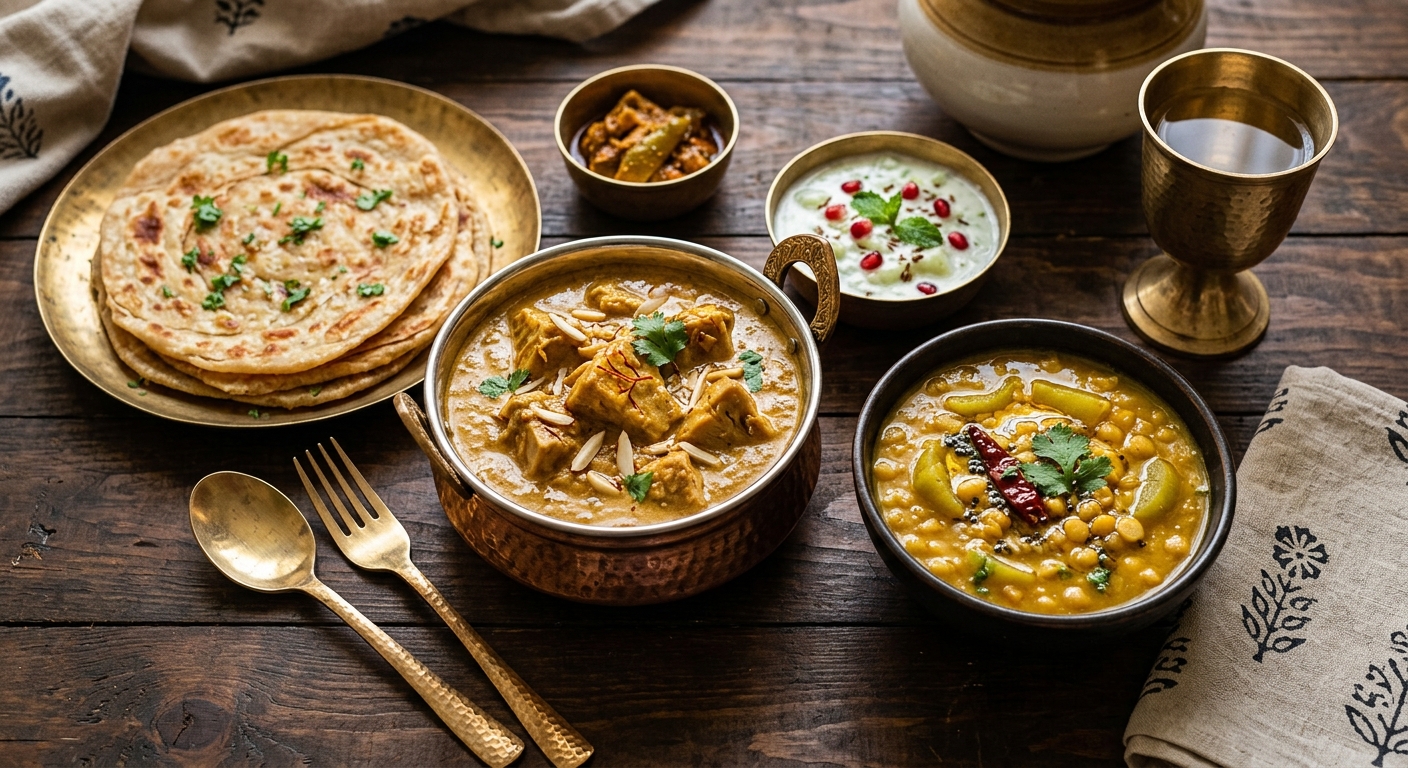
When conversations turn to Awadhi gastronomy, the mind often wanders straight to the fabled galawatis, niharis, and kormas crafted for the Nawabs of Lucknow. Contemporary menus often perpetuate a common misconception: that the vegetarian repertoire of this refined courtly cuisine begins and ends with paneer. In reality, the traditional bawarchis and rakabdars of Awadh developed an intricate vegetarian culinary canon that treated seasonal vegetables, pulses, and aromatics with the exact same precision and respect accorded to meats.
The Art of Kathal Korma: Texture Meets Royal Dum
Among the centerpieces of royal vegetarian dining in Lucknow is Kathal Korma. Raw jackfruit, known locally as kathal, holds a unique place in Northern Indian kitchens due to its dense, fibrous structure. When handled with classic Awadhi techniques, it serves as a remarkable canvas for complex gravies rather than merely acting as a substitute ingredient.
Preparing an authentic Kathal Korma requires meticulous prep work. Young, tender raw jackfruit is peeled, cubed, and typically par-fried in mustard oil or pure ghee until the outer edges take on a golden hue while retaining tenderness within. The sauce base departs from heavy restaurant-style tomato purees, relying instead on browned onion paste (tali hui pyaz), whisked yogurt, soaked melon seeds, and cashew paste.
What elevates the dish to Nawabi standards is the slow-cooking process known as dum pukht. Sealed under a tight lid over low heat, the fried jackfruit gently absorbs the essence of a whole spice bouquet: green cardamom, mace (javitri), cloves, and black pepper. In the final minutes, drops of kewra water or a whisper of meetha ittar are introduced, allowing the jackfruit fibers to fully drink in the perfumed steam. The result is a gravy of immense depth, balanced richness, and silky texture without relying on dairy heavy-handedness.
Dalcha: The Fragrant Balance of Lentils and Gourds
Another classic pillar of the Awadhi dastarkhwan is the Dalcha. While variations across the Deccan incorporate meat, the Awadhi vegetarian iteration often pairs split Bengal gram (chana dal) with tender bottle gourd (lauki) or ash gourd, resulting in a dish that harmonizes starch, vegetable sweetness, and subtle tartness.
The preparation begins by slow-cooking the chana dal until the grains are completely cooked through yet retain mild structure. The bottle gourd is peeled and cut into generous chunks, cooked either along with the dal or simmered gently in a spiced onion-ginger-garlic base so that it does not collapse into mush.
The defining character of an Awadhi Dalcha lies in its souring element and tempering. Unlike Punjabi dal tadka, which leans on fresh tomatoes and dried fenugreek, Dalcha balances richness using mild souring agents such as raw mango slices (kairi), amchur, or a very light tamarind infusion. The dish is finished with a fragrant baghar (tempering) of clarified butter, sliced shallots, cumin, dry red chilies, and whole cloves. The gentle sweetness of lauki softens the earthiness of chana dal, creating a comforting, deeply aromatic stew suitable for everyday meals and formal feasts alike.
The Nuance of Awadhi Spicing: Subtlety Over Heat
Understanding vegetarian Awadhi cooking requires unlearning the idea that robust flavor demands intense chili heat. The hallmark of Lucknow's culinary philosophy is subtlety, where no single spice is allowed to overpower another. Dishes are designed to be fragrant and digestible, leaning heavily on the cooling and digestive properties of native botanicals.
Spices are frequently categorized into wet pastes (peesa masala) and aromatic infusions (potli masala). Spices like green cardamom, cinnamon, and javitri provide aromatic top notes, while fennel seeds, coriander, and ginger paste form the warming body. Saffron dissolved in warm milk and floral extracts like rose water or screwpine (kewra) water are introduced at the very end of cooking, ensuring that the volatile aromatics do not dissipate into thin air.
Completing the Vegetarian Dastarkhwan
A true Awadhi vegetarian meal is an ensemble. Kathal Korma and Dalcha rarely stand alone on a traditional dining spread. They are routinely accompanied by artisanal flatbreads and fragrant rice preparations designed to enhance their specific sauce profiles.
For richly spiced gravies like Kathal Korma, Ulte Tawe ka Paratha—a delicate, flaky bread cooked on an inverted griddle—provides the ideal tender vehicle. The faint sweetness of Sheermal, an enriched bread laced with saffron and milk, pairs effortlessly with the sour and savory undertones of Dalcha. Alongside seasonal rice dishes such as Subz Pulao or Matar ki Tehri, these preparations prove that Awadh's gastronomic genius rests firmly on technique, patience, and a nuanced understanding of plant-based ingredients.